
.jpg)
In preparation for his IBC2026 conference session, Toby Scales, CISO Media, Entertainment, Chairperson, Google Cloud, reveals what’s next for authenticity, provenance challenges, and AI.
Toby Scales has spent much of his career helping media companies navigate periods of technological change. From Microsoft’s early cloud initiatives to his current role as chair of the Global Creative Security Community (GCSC) where his focus is on helping the industry tackle the security, authenticity, and provenance challenges created by AI, he has worked at the point where enterprise technology meets media production.
.jpg)
It’s a role built on an unusually varied career. “My first gig out of high school was working as a vendor for Microsoft. We were setting up conferences and trade shows for Microsoft worldwide,” he says. “This is the late ‘90s, so Comdex and Microsoft Tech Ed. I would set up massive hands-on labs with 600 machines. I remember at a Comdex one year, it was, ‘they’ve got to be Windows 2000 during the day, and then we’re going to do a game night, so they’ve got to be all converted over to Windows 98.’ We’d re-image all the machines overnight. That was my introduction to operating machines at scale, which has always been sort of a fascination of mine.”
Although technology defined his day job, Scales’ interests were already pulling him in another direction. “I got a degree in film studies,” he says. “Got really interested in making movies. I had a consulting firm that I started at the time and sort of put myself through school. Sold that. Moved to New York and was involved in various kinds of creative endeavours and then ended up at Omnicom – for the same reason – they were managing machines. It gave me an opportunity to manage machines at a scale that I hadn’t before.” That combination of creative experience and enterprise technology would become the thread running through the rest of his career.
Cloud changes everything
Scales returned to Microsoft just as cloud computing was beginning to reshape media workflows, working with broadcasters, studios, and technology suppliers that were taking some of their first steps away from traditional on-premises infrastructure. “I was there for about five years working with media and entertainment customers as a cloud architect, helping them move things into the cloud. Worked on some cool projects in the early days of Avid on Azure. Worked on Universal Studios moving their animation pipeline into the cloud, and then moved over to Google Cloud in 2020, working with the same set of customers,” he says.
Looking back, cloud was more than a technology transition, it also exposed how dependent modern production had become on complex supply chains, with broadcasters, studios, post houses, software suppliers, and cloud providers all becoming part of the same workflow. That understanding would later become central to his thinking about security. Joining Google Cloud provided another change of direction. “I think it became very clear that the advantage for them in the marketplace was their security stack, so that’s when I started to really get interested in security. I joined the Office of the CISO team. Lots of people want to meet with the CISO of Google and find out how we think about security, but obviously there’s only one CISO. So, our team was set up to be a kind of scaling mechanism where we could have in-depth industry knowledge, which I had from media and entertainment, as well as be able to share Google’s perspective on security.”
Rebuilding a community
That role also brought Scales into the work of the Content Delivery and Security Association (CDSA), whose roots stretched back to the era of DVDs and physical media. As AI accelerated, however, he concluded that simply refreshing the organisation would not be enough. “It was an organisation which had been around for 30 years and had some legacy but was originated in the days of physical media. As the AI boom was happening it just wasn’t the right vehicle to keep pace with that rapid pace of change,” he says.
Rather than evolve it gradually, the decision was taken to rebuild it entirely. “Just about a year ago, we sort of tore down the old CDSA organization, rebuilt GCSC more or less from the ground up, and created a model where there are three communities that we bring together: the localisation and globalization community; the creative technologists and the technical creatives; and the security community. We bring those three together to solve problems that are either unique in that community or that exist across all three because the media supply chain is so interconnected.”
The aim, he says, is to create a forum where problems can be solved collectively rather than company by company. “One of the big announcements we’ll be making at IBC is collective defence for the media industry. Basically, an intel-sharing platform, a threat-sharing platform – a dedicated working group of the most mature companies within the media space and cyber, where we can work on AI response and getting ahead of vulnerabilities and things like that. Within the GCSC we’ll continue to work on things like provenance and C2PA that affect the whole supply chain, but this collective defence is very much focused on the defenders and empowering defenders.”
‘Everyone is an APT now’
For Scales, AI has fundamentally altered the balance between attackers and defenders. The challenge is no longer simply the volume of attacks but attackers ability to adapt and combine different weaknesses across an increasingly fragmented production ecosystem. “The media supply chain, like any supply chain, is weakest at its junction points, and those junction points are typically owned by different companies. It’s extremely difficult to get coordination between those entities at times,” he says. “No two productions are exactly the same.
That’s part of what makes the rich, vibrant ecosystem that we have in media and entertainment, but it makes it uniquely vulnerable to exploitation by bad actors.” AI, he says, changes the complexion of those attacks. “It’s like intelligent brute force. It’s not just throwing two million combinations at it, it’s make an attempt; learn from that; a different attempt; learn from that. These systems are able to chain together vulnerabilities in a way that just a solid brute force would never do.”
The capability of operating as an Advanced Persistent Threat (APT), he argues, is no longer confined to sophisticated nation-state actors. “I have this phrase that I like to use, which is ‘everyone is an APT now,’” he says. “Traditionally those kinds of chaining capabilities and exploit generation capabilities were really reserved for nation states because it required huge investments in people and technology. Now that capability is blown wide open. Every ransomware gang out there can suddenly have these capabilities because of these frontier models. So, it’s a very scary time to be in cyber defence.”
The screaming producer problem
Media production brings its own complications because creative teams are organised very differently from conventional enterprises. Productions temporarily bring together freelancers, suppliers and partners who are all focused on delivering a programme, often under intense deadline pressure. Security, Scales says, inevitably comes second if it prevents people doing their jobs. “I call it the screaming producer problem. You can have all of the production security in the world, and as soon as you have one screaming producer on the phone saying, ‘I’m going to call the CEO if you don’t let this person have access,’ everything comes down, all the gates are wide open. Whether it’s somebody threatening to call, or whether it’s a screaming producer who’s just tasked his team to get it done through Google Drive or whatever, the production security ends up with all these holes in it.”
Rather than impose more rules, he believes productions need someone embedded within the team who understands both operational risk and production realities. “We’ve been playing with different names, like ‘line producer for risk.’ They’re on the ground. They’re in the weeds, and when these real-time decisions need to get made, they can be there to make a note of the decision, why the decision was made, and then go back and close off the access.” It only works, he says, if that person is accepted as part of the production itself. “The production is a family unit, and anything that happens outside of that production is seen as sort of ‘corporate.’ It’s not part of the family.”
Trust across the supply chain
Those same principles underpin Scales’ interest in provenance and content authenticity. As AI-generated media becomes more sophisticated, preserving trust depends on ensuring that provenance survives every step of increasingly complex production and distribution workflows. “The key with provenance is that it has to seamlessly cross through all those junction points. If at any point one of those junction points drops the provenance data, then the game is off.” He believes European broadcasters have established an early lead. “The EBU and the European Union is really much further ahead in C2PA adoption than we are in the States. A big part of why I go to the show every year is so I can see what the EBU and the EU broadcasters in general are up to, and then I can bring that back to the States and continue to evangelise about it.”
Listening to Scales describe his career, there is a consistent theme running from those early Microsoft trade shows to today’s discussions around AI, provenance and collective defence. Every stage has centred on managing increasingly complex systems, first physical, then cloud-based and now intelligent. The technology has changed dramatically, but his focus has remained remarkably constant: understanding how people, processes and technology work together at scale, and what happens when trust between them breaks down.

Banijay’s Adam Kaczmarski: “Brand is the enabler of the entertainment”
IBC2026 speaker Adam Kaczmarski, Creative Producer, Electric Robin, explains why successful branded entertainment must put audiences before products, measure emotional engagement, and give creative partners room to tell compelling stories.
.jpg)
CNN’s Alex Charalambides: Truth will become the asset
Alex Charalambides, Senior Vice President, Chief Technology Officer, CNN, brings digital reinvention to the IBC2026 stage.
.jpg)
YouTube’s Marc Heufelder: Moving to the front of the pack
IBC2026 Conference: Marc Heufelder, Country Manager, Product Partnerships DACH, YouTube, explains how YouTube is increasingly collaborating with broadcasters.

Particle6: “Why would anyone replace a real actor on set with an AI actor?”
As the Founder and CEO of Particle6 – the organisation behind the controversial ‘AI A-lister’ Tilly Norwood – Eline Van der Velden has already demonstrated all three abilities cited in her IBC Conference session title, writes David Davies.
Sidemen's Tim Haubeil: “Accept that the viewer is an intelligent being”
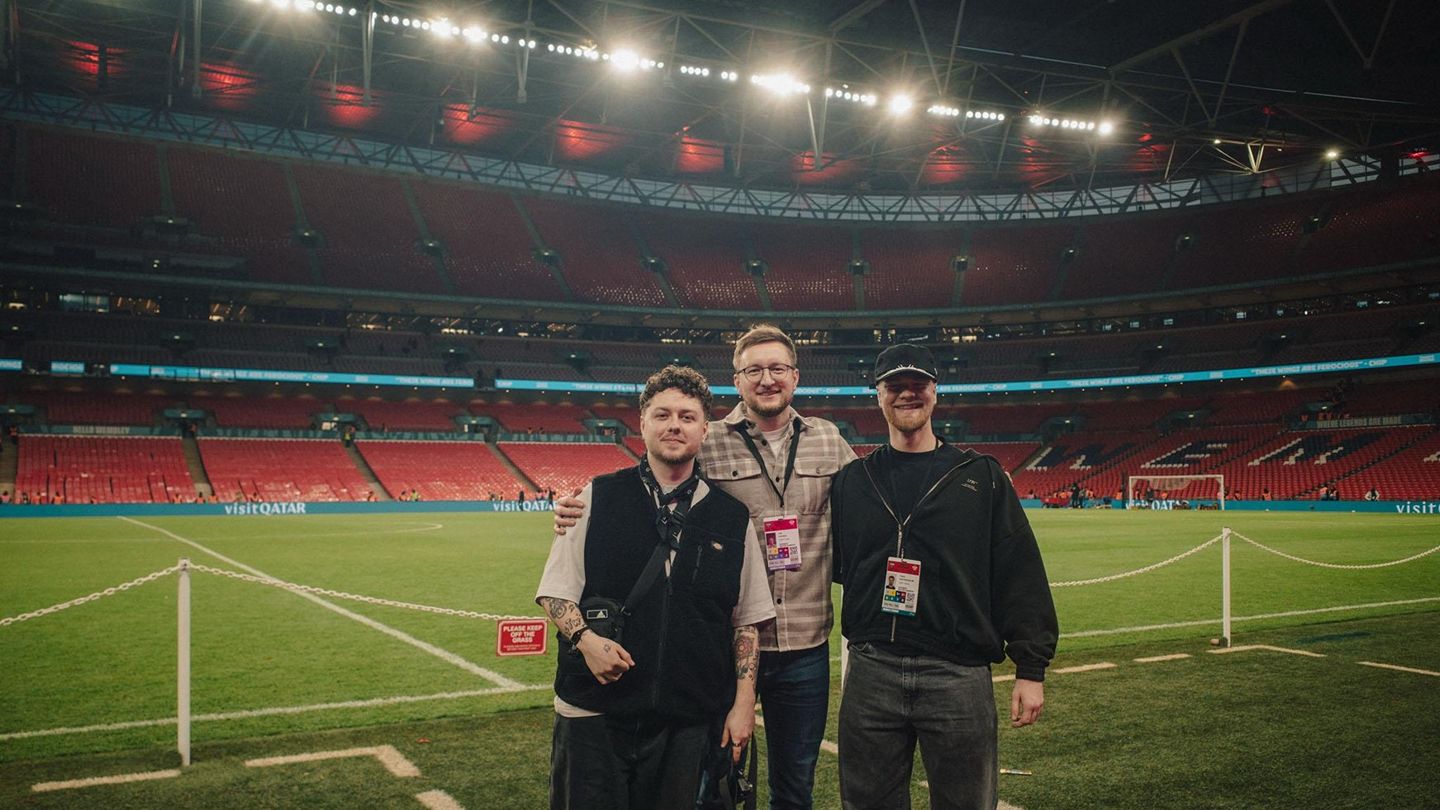
As he prepares to take the IBC2026 Conference stage, Tim Haubeil, Channel Director, Sidemen Entertainment, reveals his role in growing one of the world’s largest and most attentive creator followings in a deeply saturated market.
.jpg)
![Maria João Matos: “[GenOpt] reduces total AI token costs by 30%”](/files/live/sites/ibc/files/2026/Product News D1/D2 Visionular-AM (1).jpg)

.jpg)