Dennis Buhr, Head, Digital Transformation, Production Technology, Workflow, SVT, explores how the team developed a software-defined live production platform for the Olympics.
With Buhr’s leadership, the broadcaster underwent a profound technical and organisational transition for the 2026 Winter Olympics. At the end of it all, the software-defined live production platform, "Neo", was capable of running more than 550 hours of coverage across 10 simultaneous production environments. For this feat, the SVT won the EBU Technology & Innovation Award 2026 for its software-defined live production platform, "Neo", in June 2026.
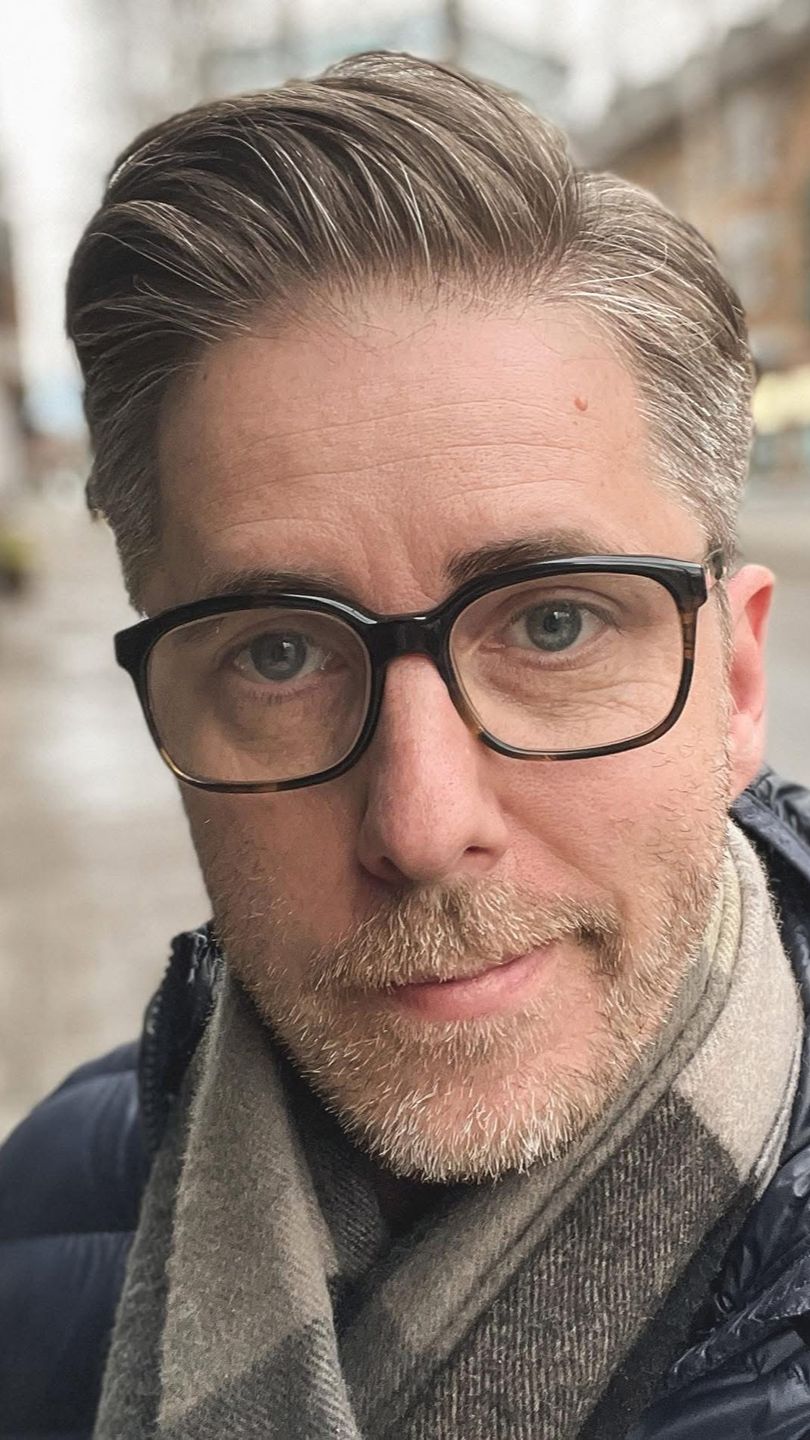
SVT’s Dennis Buhr speaks to IBC365 to reveal which imperatives were most important to pulling off the transformation.
For those not familiar with Project Neo, how would you describe it, and what does “software-defined” mean in the context of live production?
Project Neo is essentially a live production platform built entirely on software rather than dedicated broadcast hardware. Instead of relying on purpose-built vision mixers, multiviewers, or audio processors, those functions run as applications on standard IT infrastructure.
To me, “software-defined” isn’t just about replacing hardware. It means that production becomes modular. It means that we need to accept different screens, levers, buttons, and even headsets. If we need a new workflow, a new feature, or a different user interface, we make it rather than waiting years for a hardware refresh. That gives us much greater flexibility and allows production to evolve and scale much faster than traditional broadcast systems ever could.
What made you confident enough to run Project Neo at Olympic scale, more than 550 hours of coverage across 10 simultaneous production environments – rather than trialling it on a lower-stakes event first?
The Olympics may look like a giant technical leap for us, but it really wasn’t.
Project Neo had already been in daily production for several years. We’d produced hundreds of productions, gradually increasing complexity while constantly measuring reliability and operator feedback. By the time the Olympics arrived, the technology itself wasn’t the biggest question anymore.
Our slow-TV alone, The Great Moose Migration, ran for over 500 hours in 2024.
The real challenge was operational scale. Could we support more than 10 simultaneous Neo production environments, monitoring, and engineering work around the clock? Those were the areas we focused on. We didn’t take a gamble on that one, but of course, in a TV-building, the Olympic rings by themselves make everyone extra cautious.
What was the hardest organisational part of the transition from dedicated broadcast hardware to standard IT infrastructure for your teams?
Without question, it was people and culture. The technology itself was the easy and fun part.
Broadcast engineers and IT engineers often speak different languages, have different cultures, and solve problems differently. We had to build bridges between those worlds while also helping operators trust a completely new way of working.
You can’t simply replace hardware with software and expect everything else to stay the same. Roles evolve, support models change, deployment becomes continuous, and software gets improved every week instead of every five years.
That journey was significantly harder than installing software.
How did you go about designing for operators who’d built their careers on traditional broadcast equipment?
We started by listening. Operators don’t care whether something is built in software or hardware – they care whether it helps them produce great television. To us, an operator is anyone, and during the Olympics it truly was everyone. From former CTOs to internal postal service and all in between. Although in normal situations without Olympic rings, our operators are primarily editorial staff.
We spent a lot of time sitting beside operators during productions, watching how they worked, understanding what stressed them and what made them confident. Watching, listening, and learning.
The goal was to try not to imitate hardware ways of working – it was to preserve the confidence in our operators and give them better tools.
Now that the Winter Olympics are behind you, what’s the biggest lesson you’d pass on to another broadcaster considering a similar move to software-defined production?
Don’t think of it as a technology project. It’s a digital transformation of production.
Invest just as much in people, training, operations, and support as you invest in software development.
Also, don’t wait until everything is perfect before using it. Production builds become good because they’re used in real production, measured, and improved continuously.
Finally, measure everything. Opinions are interesting, but data is what builds confidence.
Winning the EBU Technology & Innovation Award is a strong external validation. Internally, how has that recognition changed the conversation about Project Neo’s future within SVT?
The award was incredibly meaningful because it came from our peers across the industry.
Internally, I think it gave people confidence that what we’ve been doing for the past five to six years isn’t just an interesting experiment for ourselves – it represents a genuine shift in live production. It made me so happy to see everyone’s hard work get mentioned like this. It truly is a team effort, and that piece of glass belongs to all of them!
Are there new capabilities or use cases you’re developing since the Olympics to extend beyond live sport?
Absolutely. The platform was never designed for sports only. We’re now looking at how the same architecture can support news, current affairs, and other types of live productions with different workflows and production models.
We’re also continuing to invest in automation and AI-assisted development for new production functions. One of the biggest advantages of software is that the platform never really stands still. Every production teaches us something new that can immediately become part of the product.
Where do you see the trend towards software-defined production heading over the next few years, and what challenges still need solving?
I think we’re reaching a point where software-defined production is no longer a niche idea – it’s becoming the expected direction for the industry. Personally, I don’t feel alone in the same way as I did in 2022, for example. The climate and culture around questions like compression and latency are much more balanced and fun nowadays.
I see broadcasters collaborate in entirely new ways, sharing knowledge and even code; open standards come to life, and we innovate together instead of sitting alone with the exact same problems.
The challenges ahead are less about technology than about interoperability, operational maturity, and common standards. We need ecosystems where different software components work together just as reliably as traditional broadcast equipment has done for decades.
That’s why initiatives around open standards and collaboration between broadcasters are so important, I think.
Is there anything else you would like to add?
One thing that excites me the most right now is how AI is transforming software development. With tools like Claude, ideas can become working software incredibly quickly. Two years ago, a feature request took months to deliver. Today, it’s not unusual for an operator to suggest an improvement during our morning stand-up and have a working version by the afternoon. It can’t be compared with how it was when we began this journey.
But that speed only matters if you have the right partners. Software vendors should focus on building a robust core with excellent APIs, allowing broadcasters to adapt workflows and create the user experiences they need. If the platform isn’t open, you simply replace one closed hardware box with a closed software box – and you’ve missed the whole point.
To me, that’s the real promise of software-defined production. It’s not just about replacing hardware with software; it’s about creating systems that evolve at the same pace as the people using them.
Collaboration and innovation are crucial ingredients for establishing a sovereign cloud and AI ecosystem within Europe to reduce dependency on US hyperscalers, concluded an SMPTE panel at IBC2026.
Hans Hoffman, Deputy Director, EBU Technology, Innovation Department, Media Technology Strategies, EBU, recently took part in an IBC2026 panel, which debated the top priorities needed to establish a sovereign cloud and AI ecosystem within Europe and reduce dependency on US hyperscalers. Discover more here.
EBU’s Alan Fagan: “Eurovision Sport isn’t simply another streaming platform”
The Managing Director of the EBU’s first direct-to-consumer platform tells David Davies about two years of market growth and technological progress, recent excursions into AI, and the broader EBU sports ecosystem.
.jpg)
BAFTA Albert’s Matt Scarff: “If I had to name one challenge, it would be time”
For 15 years, BAFTA Albert has worked alongside the UK's screen industry, helping transform the power of storytelling into meaningful climate action, both behind the camera and on screen.
 SR (1).jpg)
Ant Boys on The Invite and AI's promise
ACE Eddie-winning and BAFTA-nominated film editor Ant Boys, whose work includes The Great and Veep, discussed his latest film, the comedy/drama The Invite, and shared his views on the potential of AI in film editing, during a conversation at the IBC Conference yesterday, presented by American Cinema Editors.
.jpg)
Toby Scales: Building trust in an AI world
In preparation for his IBC2026 conference session, Toby Scales, CISO Media, Entertainment, Chairperson, Google Cloud, reveals what’s next for authenticity, provenance challenges, and AI.

Banijay’s Adam Kaczmarski: “Brand is the enabler of the entertainment”
IBC2026 speaker Adam Kaczmarski, Creative Producer, Electric Robin, explains why successful branded entertainment must put audiences before products, measure emotional engagement, and give creative partners room to tell compelling stories.
.jpg)
.jpg)
.jpg)