
.jpg)
The transition to IP using SMPTE 2110 has been broadly successful in a studio environment but interoperability in the live and near live domain still has work to go. A recent innovation from the BBC could provide the answer.
The Time-Addressable Media Store (TAMS) API developed by BBC R&D is a new way of working with content in the cloud. It’s an open specification that fuses object storage, segmented media and time-based indexing, expressed via a simple HTTP API. It is intended to lay the foundations for a multi-vendor ecosystem of tools and algorithms operating concurrently on shared content all via a common interface. In effect, blending the best of live and file-based working.
The open-source API specification was launched to the industry at IBC2023 which is where AWS sourced it as the basis for a proof-of-concept Cloud-Native Agile Production (CNAP) workflow, demonstrated at IBC2024.
AWS was particularly interested in the potential of TAMS to streamline the process of fast-turnaround editing in the cloud in an open, modular way...
You are not signed in
Only registered users can read the rest of this article.
.jpg)
Call my agent: Agentic AI begins buying media advertising
AI agents have the potential to automate media transactions at scale, but today’s focus is less about fully autonomous workflows and more on experimentation and efficiencies.
.jpg)
NAB Show New York: The stakes could not be higher
As media, technology, and politics become increasingly intertwined, the stakes extend far beyond the balance sheet.
.jpg)
6G-Holonet: Bringing Star Trek’s comms system to reality
As the 6G-Holonet project sets its sights on live entertainment, cultural heritage sites, and immersive media, Alex Buchan, Chief Technology Officer, DTG, reveals the key technological considerations that have ensured the project’s impact.
.jpg)
ULL-timate goal: How streamers are prioritising ultra-low latency
With audiences expecting instant global information, and broadcasters competing against social platforms that deliver clips within seconds, the race is on to deliver ultra-low latency (ULL) as a competitive edge.
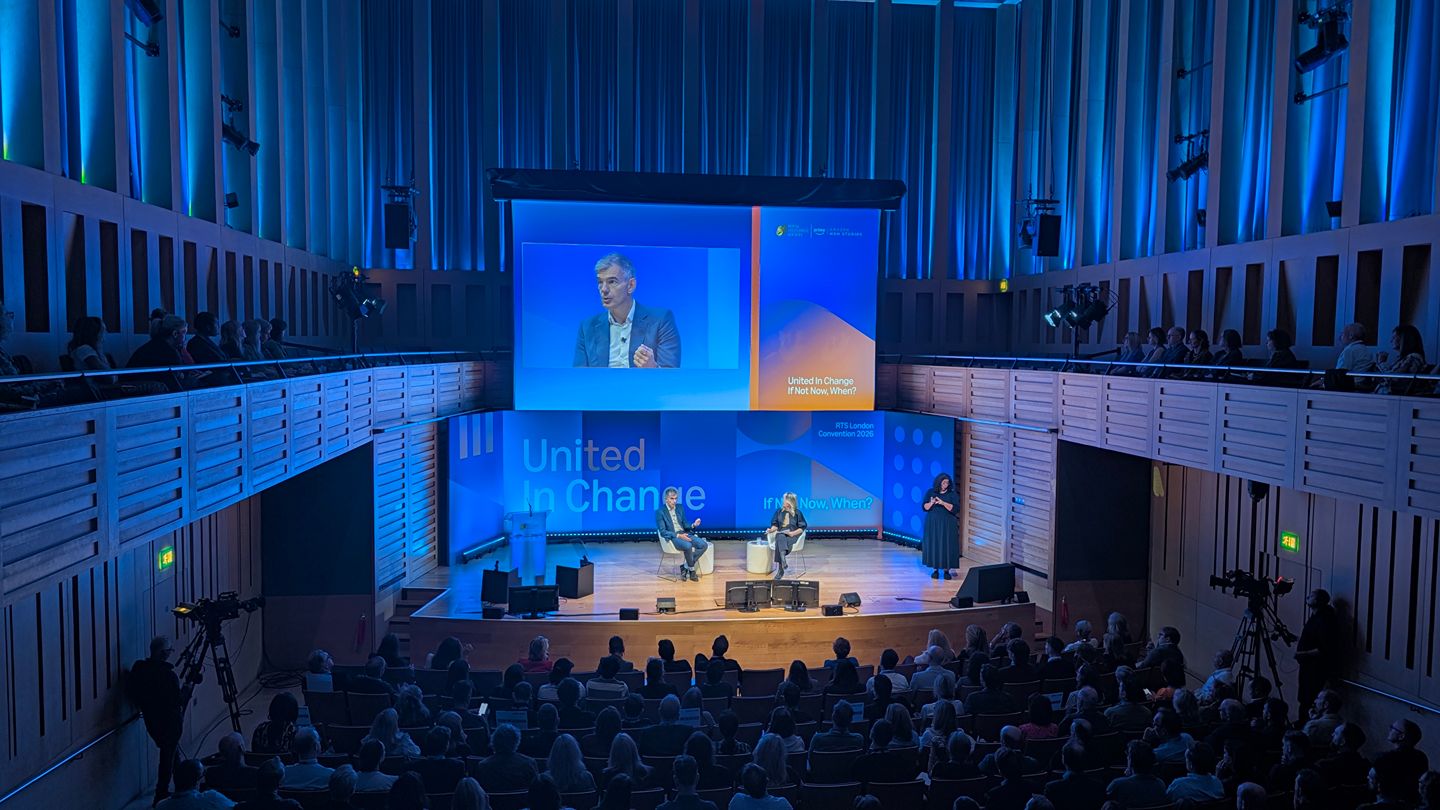
RTS Convention: “The prize for standing still simply isn't an option”
AI was largely sidelined at the annual RTS gathering where the fate of public service media took precedence. Adrian Pennington reports.
.jpg)
.jpg)
.jpg)
.jpg)