
Although global broadcasters are accelerating their shift from satellite to IP, the industry seems to be entering a hybrid era rather than a clean break.
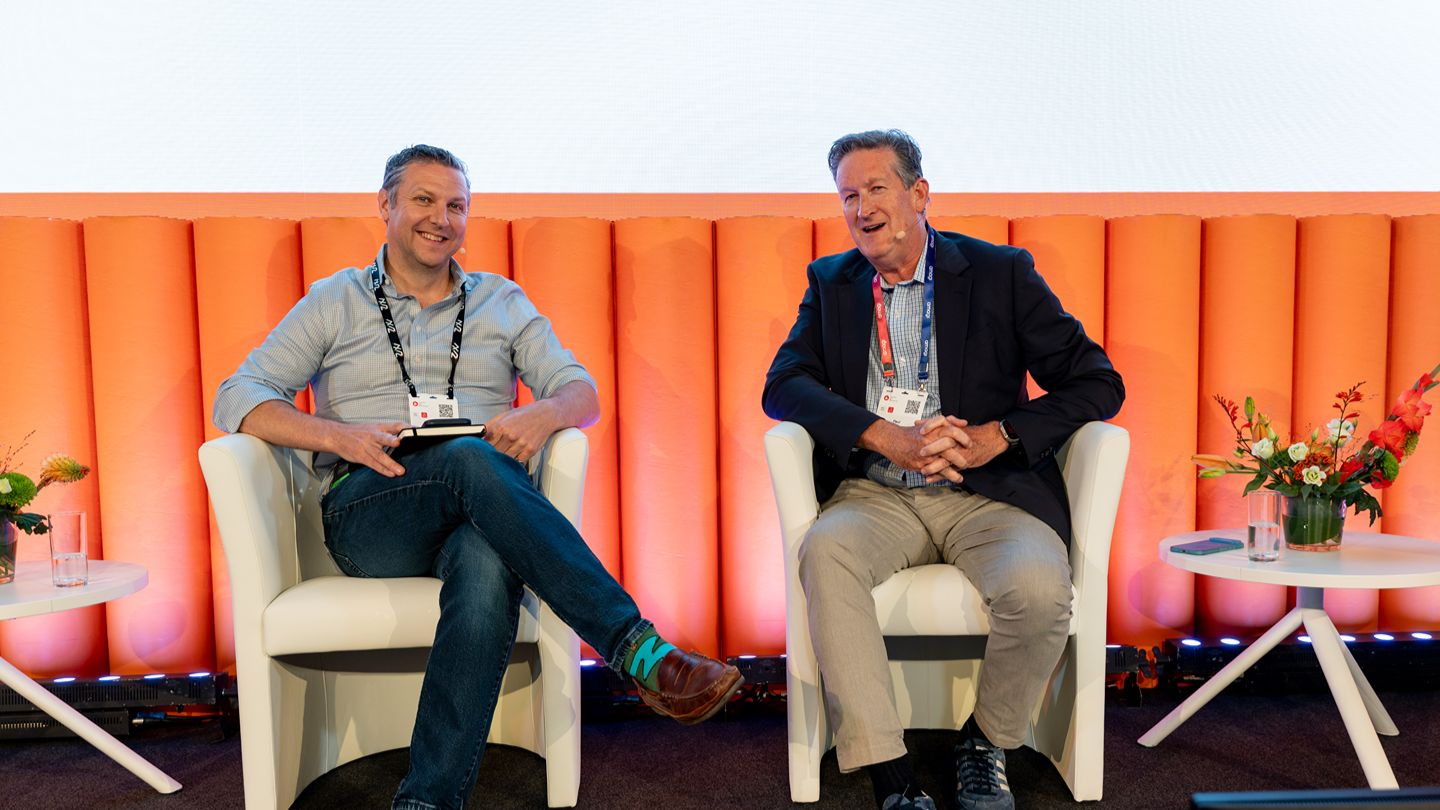
Speaking on the Content Everywhere stage, Jonathan Low, VP, Channel Sales, Partnerships, Zixi, said: “Satellite has been the backbone of contribution and distribution for over 40 years. What’s changed is that IP finally got reliable enough to trust for tier‑one live broadcast.”
Paul Finster, VP, Business Development, Partnerships, Amagi, noted that broadcasters have talked about migrating to IP for a decade, but only now are the bandwidth and quality ready for prime‑time broadcast.”
Amagi runs thousands of cloud‑based channels, and Finster said IP unlocks capabilities satellite simply cannot match.
“We can deliver personalised streams at scale,” he said. “Targeted content, localised feeds, even individualised streams all over the open internet.”
Regulatory pressure is accelerating the shift. “Broadcasters are being pushed as frequencies are auctioned off,” Low said. “It’s forcing a move to IP but also creating new monetisation opportunities.”
IP removes the constraints of satellite such as finite transponder space and fixed channel capacity. “Instead of 30 satellite feeds, you can deliver thousands,” Low said. “That opens up new revenue streams.”
Finster highlighted targeted advertising as one of the biggest gains. “We can insert ads for a specific location, household, even an individual. That’s impossible with satellite.”
Still, both executives stressed that satellite will remain essential for major live events and remote regions.
“Tier‑one sports still rely on satellite,” Finster said. “And rural affiliates may need hybrid setups.”
“This isn’t IP versus satellite,” Low agreed. “It’s IP and satellite. Bonded, redundant, and more flexible.”

IBC2026 Live Blog: Catch up with all the best innovations
Welcome to the IBC2026 Live Blog, getting under the skin of the global media and entertainment industry's biggest and best trade show.
.jpg)
FAST is the next frontier of creator domination
The creator economy is no longer a sideshow in Free Ad-Supported Streaming TV (FAST) but a core channel segment with platforms actively competing for content.
Global student On Air project is already igniting careers
On Air, the global student‑run broadcast initiative, is scaling up in its second year.
.jpg)
CTO’s lean on AI to reshape business strategy
Senior leaders from Australia’s ABC and Olympic Broadcasting Services (OBS) outlined how AI is reshaping every editorial and operational workflows while insisting that human judgement remains central.
.jpg)
The pull era: Why media survival hinges on the phone-centric consumer
To survive, this industry has to redefine broadcast and put its consumer at the centre of every decision it makes. They are no longer either a TV viewer, or a mobile user, they are both at once, according to Evan Shapiro, delivering a rapid-fire talent programme keynote on the Future Tech Ignite stage in hall 14.
.jpg)