
The European Broadcasting Union (EBU) has unveiled the nominees for its annual EBU Technology and Innovation (T&I) Awards 2026.
The winners of the 13 nominees will be announced during the EBU T&I Summit in Barcelona on 18 June 2026.
.jpg)
UK broadcaster ITV has secured four nominations for innovations that ranged from AI to sustainable production.
Many of the nominees' work focuses on AI through to live production, virtual production, cloud platforms, and content management.
Full list of EBU T&I Award nominees 2026:
ORF Content Management Center
ORF, Austria • Markus Korhammer
ORF was recognised for a full SMPTE ST 2110 transformation of its broadcast operations, uniting radio, television, and streaming signal routing across two high-availability zones, with new master control, playout, and multifunctional production spaces. It used one-third of the previous rack space.
Dynamic streaming for the Olympic and Paralympic Games
CBC/Radio-Canada • Félix Poulin
CBC/Radio-Canada completed a real-world deployment of the EBU Dynamic Media Facility Reference Architecture, letting a single operator augment Olympic Broadcast Services (OBS) streams from a laptop. Over 140 hours of coverage reached peaks of nearly 500,000 viewers on CBC’s OTT platform.
Alix: a converged IT-media cloud platform
France Télévisions • Heikel Manai
France Télévisions’ multi-cloud, open-source platform brought together IT and media workflows onto a single Kubernetes foundation, with modules for subtitling, transcription, media processing, and AI inference. The sovereign and vendor-neutral system was built to support dynamic media facility (DMF) deployments.
medIAenrich: AI-driven editorial metadata at scale
France Télévisions • Romuald Rat
France Télévisions also built an AI platform with Télécom SudParis that segments programmes into editorial sequences and combines visual, audio, and contextual analysis to generate broadcast-grade metadata at a fraction of commercial costs. It’s free of licence fees for EBU Members.
ARD Sounds: the play button for your day
ARD, Germany • Lukas Krohn-Grimberghe and Stefan Köhler
ARD Sounds is a unified digital audio platform that brings podcasts, live radio, and event streams from across ARD’s regional broadcasters into a single user-centric app, with intelligent recommendations and curated collections that are aimed at younger, digitally native audiences.
Fehler im System: live multi-camera virtual production
SWR, Germany • Philipp Jacobs
SWR’s Fehler im System is a workflow that supports live switching between multiple tracked cameras on a single LED volume, overcoming the single-camera limit of traditional virtual production. It has been proven on a multi-hour role-playing game streamed live on Twitch.
A framework for generative AI
Rai, Italy • Mariangela Borneo, Roberto Iacoviello, and Alberto Ciprian
An IBC Accelerator project led by Rai with VRT, YLE, EBU, Globo, ITV, and partners delivered a modular framework that standardises prompts and metadata across text, image, audio, and video tools. It was validated through the photorealistic trailer “Echoes of Rome”.
Neo: software-defined live production at Olympic scale
SVT, Sweden • Frida Thelin
SVT’s fully software-based production platform, which runs on standard IT hardware, was used to deliver 10 parallel production environments and OTT channels at the 2026 Winter Olympics. This came to more than 800 hours and 150 sports productions in total.
Machine-learning-assisted MCR audio monitoring
BBC, UK • Paul McGrath
The BBC trained a model to recognise what BBC Radio 5 Live should sound like, and alert when distortion appears that conventional equipment treats as valid audio. Running on a Raspberry Pi, the model demonstrated that application-specific machine learning needs neither LLMs nor server racks.
Sustainable production with solar and battery power
ITV, UK • Clive Santamaria
ITV’s hybrid power systems used second-life EV batteries and solar power, deployed on shoots including I’m a Celebrity and Nobody’s Fool, to cut fuel consumption by up to 60%. The team is open-sourcing its learnings as a blueprint for the wider industry.
Intelligent automation through commodity AI workflows
ITV, UK • Clive Santamaria
A self-service platform let teams across ITV build their own AI-powered automations. It did so by connecting everyday tools and systems, with no coding required. More than 2,000 hours of staff time were saved in the first six months.
AI agent Hub: governed multi-model access
ITV, UK • Clive Santamaria
ITV put together a single governed interface for switching between approved foundation models and building prompt-based assistants, with central routing, role-based access, audit logging, and provenance controls. Trial users reported time savings (70%) and quality gains (over 80%).
Qualitative Enricher: AI reasoning at scale for ITVX
ITV, UK • Clive Santamaria
An AI service generates qualitative metadata for ITVX – ranking the most recognisable cast members and describing mood and atmosphere – with a secondary AI scoring outputs and a daily budget cap. The system costs less than £10 a month to run.
The EBU recently called for an update to European legislation to address challenges from big tech and AI, focusing on protecting media visibility, ensuring fair competition, and preserving cultural diversity in the EU. Discover more here.
JustWatch to launch own streaming service
Reports say that JustWatch Group, which operates the world’s largest streaming guide, will launch its own streaming service, called JustWatch TV, in October.
.jpg)
CBC/Radio Canada picks Dalet
CBC/Radio-Canada has selected Dalet to modernise its news operations across Canada.
 (1).jpg)
Evergent wins API Gold from TM Forum
Evergent has achieved Gold status in TM Forum’s Open API Conformance Certification programme, advancing from the Silver status earned in the first quarter of 2026.
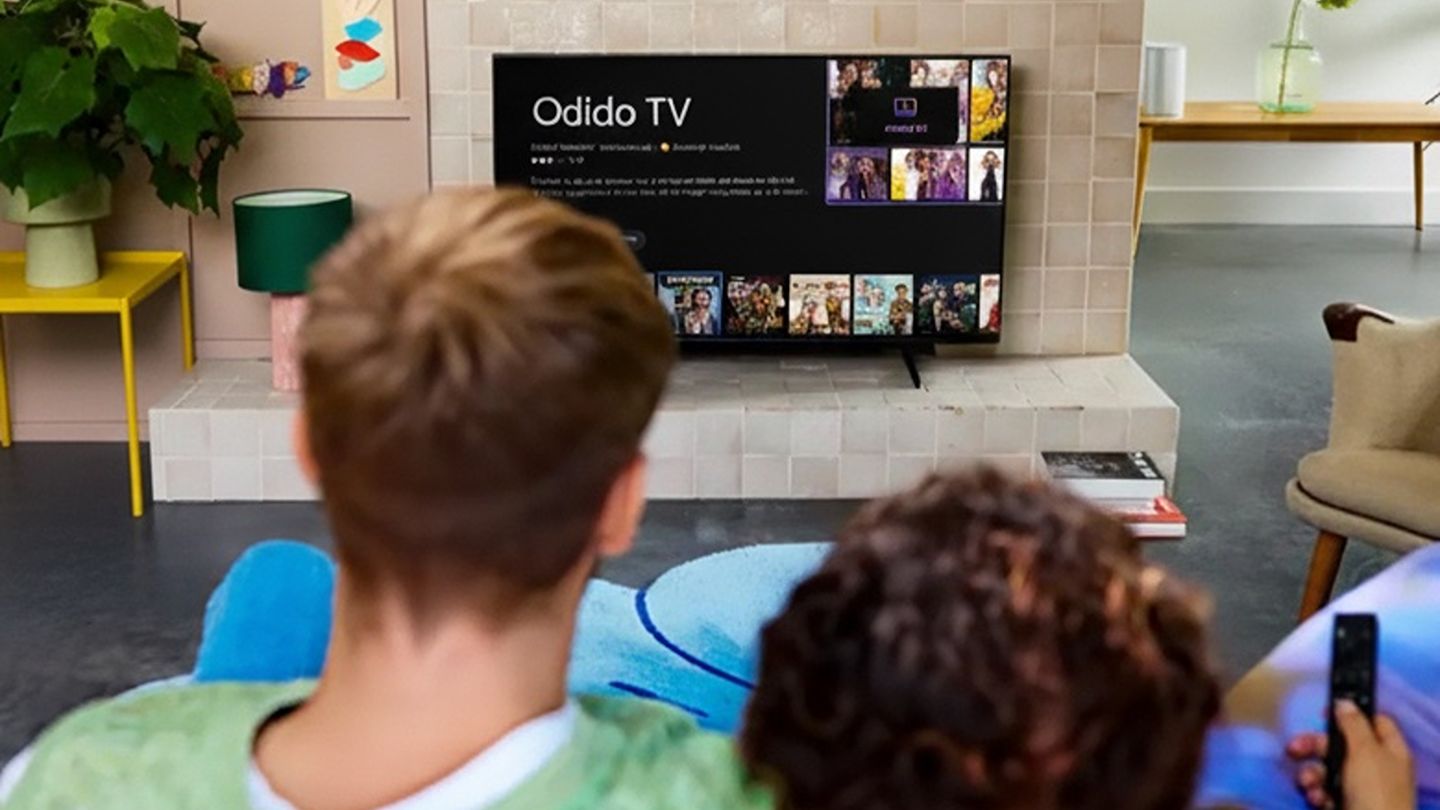
Dutch telco Odido picks Synamedia Go
Odido, a telecoms operator in the Netherlands, has selected Synamedia Go to support its TV streaming service.
Zixi extends integration with TAG Video Systems
Zixi and TAG Video Systems have announced an extended integration that enables Zixi’s live video delivery and orchestration software platform to leverage TAG’s content matching technology.

 (1).jpeg)
.jpg)