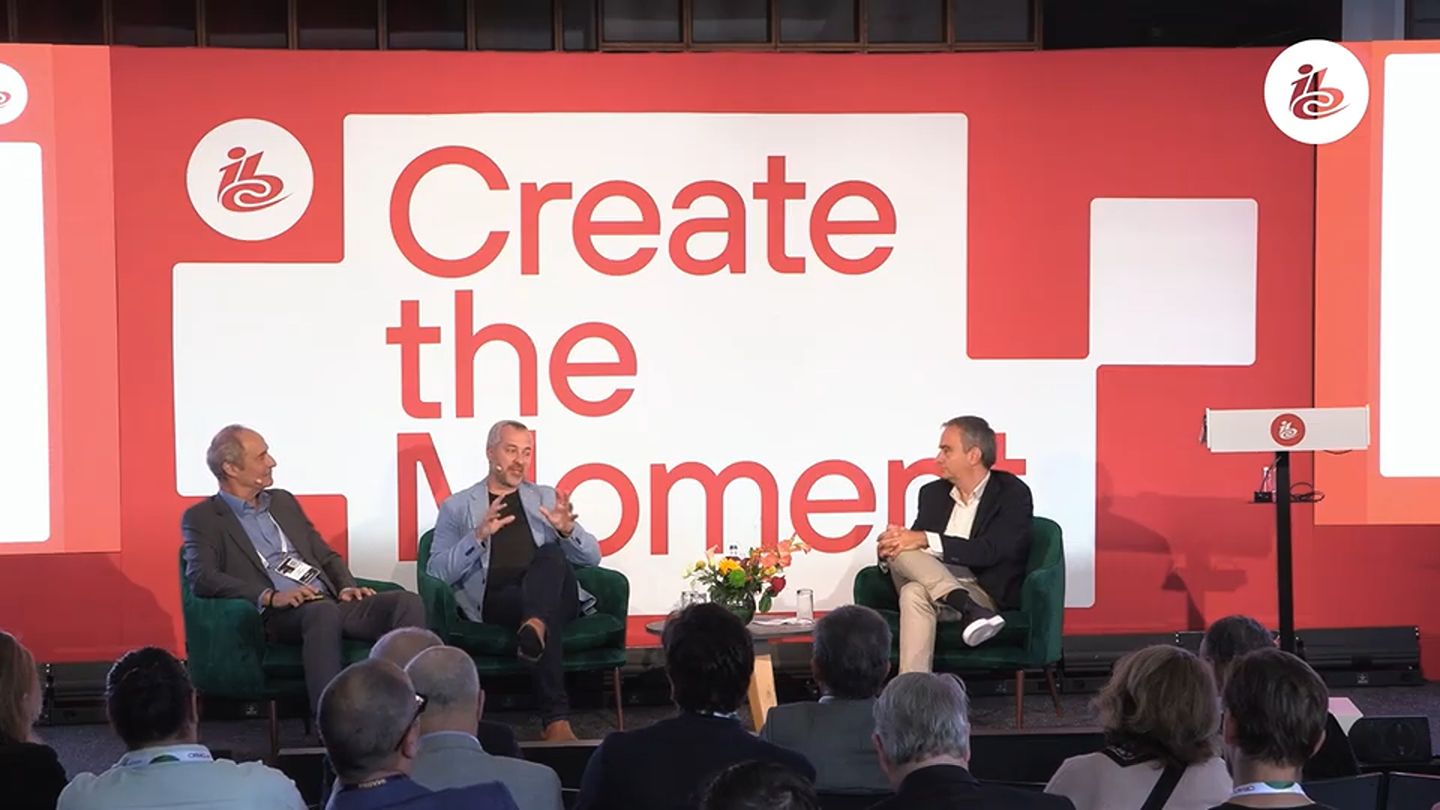
Kicking off Saturday morning on the Future Tech Stage, a fireside chat titled ‘Hybrid Filmmaking: How Innovative Dreams Is Rewriting the Rules of Production’ saw Adam Jones, Director of Production Technology and Innovation, Innovative Dreams, dig into the details of integrating generative AI and virtual production into his filmmaking pipeline with Sean Wallitsch, Senior Visual Compute Solutions Architect, Amazon Web Services.
.jpg)
Jones took an ameliorative stance on industry backlash to AI use, outlining the benefits he has found so far, as well as pointing to the need for education around the technology’s use.
“It's a delicate situation; patience is really key. [When people are negative about GenAI use] I realise that that person is probably one of two things: they're either opposed to it because they're threatened by it, or they're opposed to it because they don't know anything about it, so either way, what I need to do is I need to be a patient educator.
“I have a director that I've spent multiple hours of phone calls with, and he sits with me at my cart, and we go through it, and I show him an overlay to demonstrate that the performance is retained. It's a thing where you have to be incredibly patient and loving with people, and realise that they just need education. I eat and breathe this all day. You have to give them a moment to acclimatise to the new climate, and then be patient as you educate them”, he summarised.
Jones was unsurprisingly bullish about the potential of GenAI combined with virtual production, telling an anecdote about shooting season two of hit series House of David.
“We were filming on location in Greece, it's very dry and there's a lot of fires, and so you have to be very mindful when you introduce any sort of fire element. We have a particular scene in season two where it's a fire forest, and so what we did is we created the background from photos that I had taken and we created this forest. Then we [virtually] caught it on fire, and then we created propane trees. Our special effects guys made these trees out of metal that had little holes, and they would light them on fire with propane.
.jpg)
“So we spent three or four days on that scene, where sometimes it might be a one or two take type of thing, but with the wall, we were able to burn it as much as we wanted. It was so much more safe, and we were able to see the creative vision of what was in our director's head come to life in real time through the lens.”
He was also keen to emphasise the importance of human involvement: “My perspective is I hold very dear to me the performance of my actors. I don't want to replace them. Not to get too on a pedestal about this, but I think we can make beautiful art when we keep people involved, whether it be hair, makeup, wardrobe, and definitely our actors. Because there's something about the face that you connect with.”

IBC2026 Live Blog: Day 4 – Everything you need to know
Welcome to the IBC2026 Live Blog, getting under the skin of the global media and entertainment industry's biggest and best trade show.
.jpg)
Delta Protocol sets sights on becoming new streaming industry standard
The Saturday pre-lunch slot on Hall 14’s Future Tech stage was ably filled by the presentation of the IBCAccelerator project, ‘Delta Protocol: The Future of Live Streaming’.
.jpg)
.jpg)
EBU confident of shared cloud future
European public service media have taken a significant step toward a shared cloud future. A new feasibility study revealed for the first time at IBC, confirmed that a pan‑European cloud ecosystem is achievable — provided broadcasters can overcome several organisational, financial and regulatory hurdles.
.jpg)
AI transformation reshapes CNN’s future
CNN is fusing AI into the backbone of its operations to give the 46‑year‑old cable network the legs to thrive for another five decades.
.jpg)