
The annual British Society of Cinematographers (BSC) Expo returned to the Evolution Centre in Battersea, London, this weekend, attracting key professionals across the production industry with its packed seminar schedule and frank discussions on the future of the film industry.
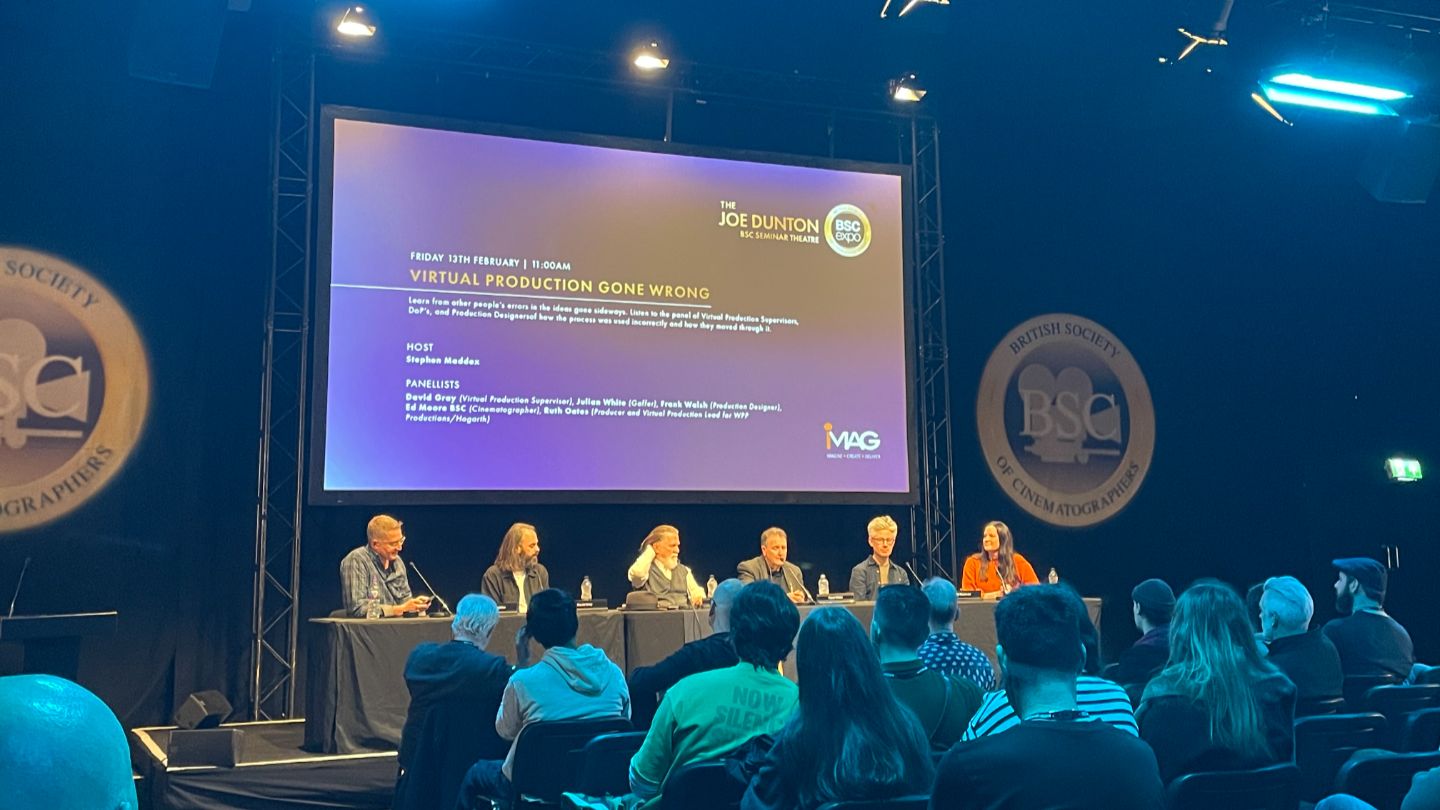
Running from Friday 13 February until Saturday 14 February, BSC Expo 2026 explored everything from starting in the industry to lighting masterclasses. The first talk of the day, ‘Virtual Production Gone Wrong’, was moderated by Stephen Maddox, writer, director, producer, and Board Member for the University of York.
.jpg)
During this panel, Frank Walsh, Production Designer at Lost in Space, noted: “Virtual production is a toolbox. AI is another tool in the box. When Photoshop came along, it changed my life. I never had to get out the paints or crayons again. iPads expanded that world. [However] AI is a real b*****d to work with. It drives me crazy because when you’re trying to create something specific, it’s the most obtuse thing to use. It’s fun, and I’ve churned out stuff quickly to show directors and ask: ‘Is that the sort of thing you’re thinking?’ Then, I go and get an artist and work with them on it. So, treat it as an element. Think: ‘Is there a simple way of dealing with the problem at hand?’ It won’t solve all your problems.”
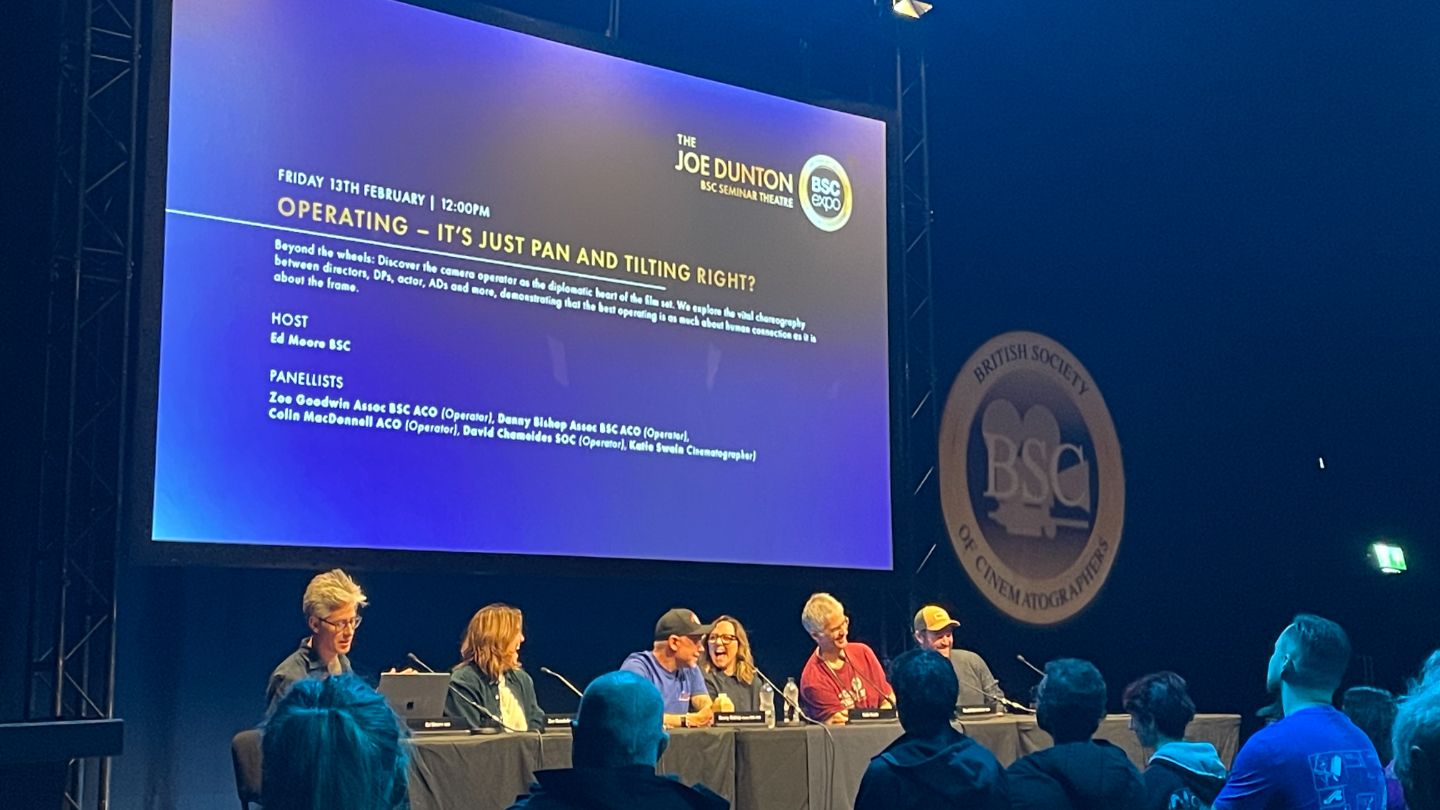
Next, at the ‘Operating – It's just Pan and Tilting, Right?' session, camera operators Danny Bishop, Zoe Goodwin, Colin MacDonnell, and David Chameides chatted with cinematographers Katie Swain and Ed Moore. The panel discussion moved fluidly from the complex interpersonal negotiation skills needed in the role to the practical technological concerns that come with forecasting directors’ creative desires, to the work-life balance expected as a parent in an increasingly international industry.
Chameides stated: “If you want to be a good operator, take a psychology course… I view my job as a protector. I’m always 4ft away from the actor, whereas DP has to go back to the DIT [Digital Imaging Technician] tent, talk with the production designer, have lunch with wardrobe, etc. They can’t sit on that camera all day, like I am. So I will quickly try to figure out what they do and don’t need, whether they’re having a bad day, or if they need more time. Similarly, I often need to protect the DP’s frames from the gaffer and boom operator, who want to be as close as possible.”
BSC visitors were then treated to a preview of Bedlam, a new Blackwater Pictures feature that was shot on the Blackmagic URSA Cine 17K 65. Having recently completed principal photography, Director of Photography James Butler and DIT Mark Kozlowski gave a rundown of what it was like to step away from indie expectations of expensive ARRI cameras. The creatives detailed how they experimented with the digital 65mm anamorphic Hawk65 lenses and a cloud-native DaVinci Resolve workflow to deliver “deep blacks” in fire-lit dungeons while keeping producers happy within the £5m budget.
Butler explained: “Our director just loved the idea of shooting 65. He was sold as soon as we did one lens test, due to the separation in portraiture on that sensor. The vintage 74s had too much character. You couldn’t rein it in. With the 65s, you could use filtration, dial in haze, and distortion. They just about covered the 2.21 sensor in a 1.3 squeeze; we were losing about 17% just off the edges, which is right where the vignette was, so we ended up with a nice, clean image at 2.39:1. We started with the 6K, and then we got the 12K straight out of prototyping. Then, Hawk got a cage prototyped, machined, and anodised within a week… To appease producers and distributors, we’d shoot most of the nighttime scenes one stop over where we wanted them. Then, I'd expose it, check it, and we'd rehearse it, and we’d drop it down to where we actually wanted it to be.”
Kozlowski revealed: “One of the things I like about Blackmagic is that all of a sudden, things are affordable and doable. You empower the creative, the directors, and the DoPs to go: ‘I can make whatever I want, because I don’t need £2m to do it. We'll get better actors or a better location.’ Suddenly, it works… [Additionally,] the cameras were loading the proxies straight into a Resolve cloud project, which our assembly editor worked on from day one. So, at wrap at the end of the day, we wouldn’t just watch dailies, we'd watch full assemblies.”
Show floor tech
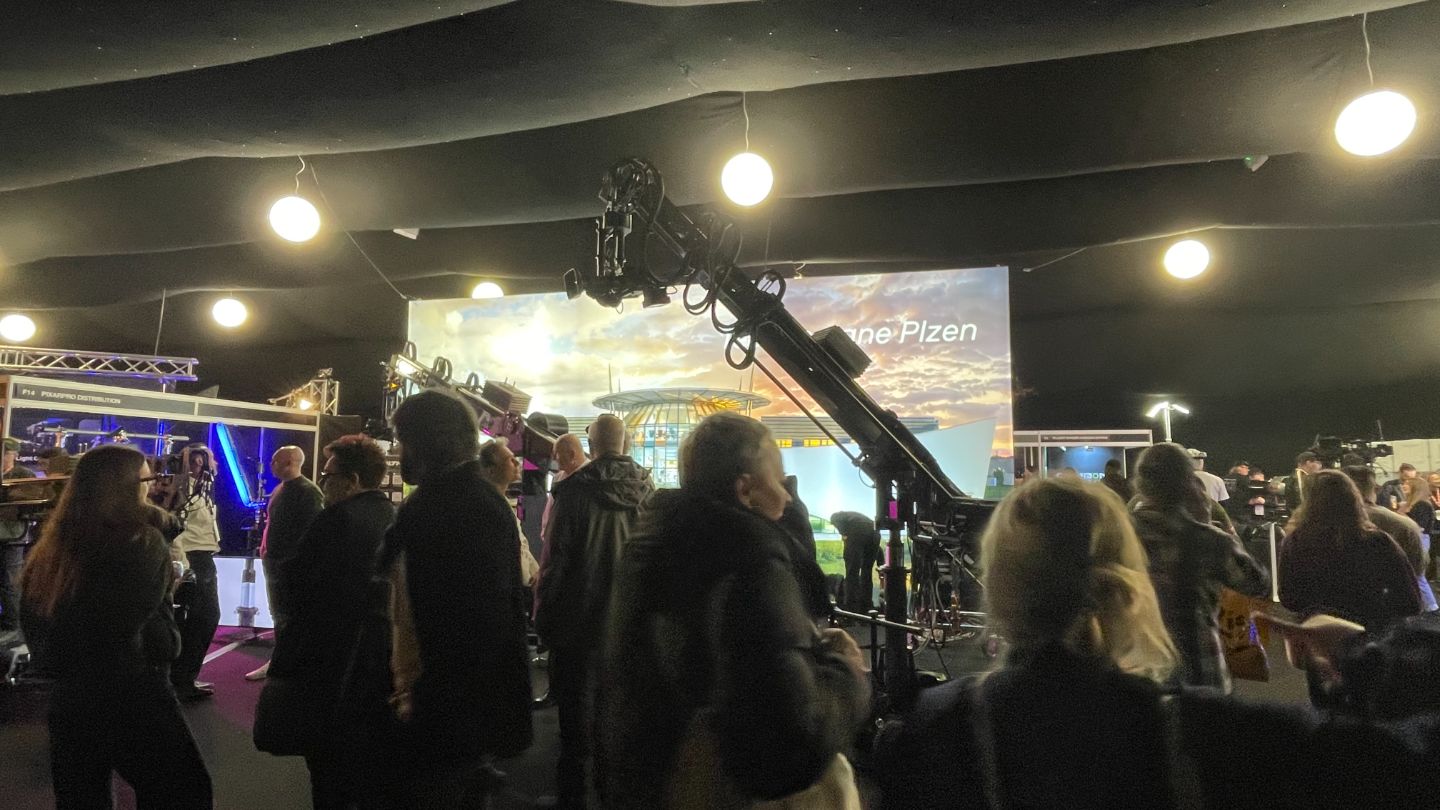
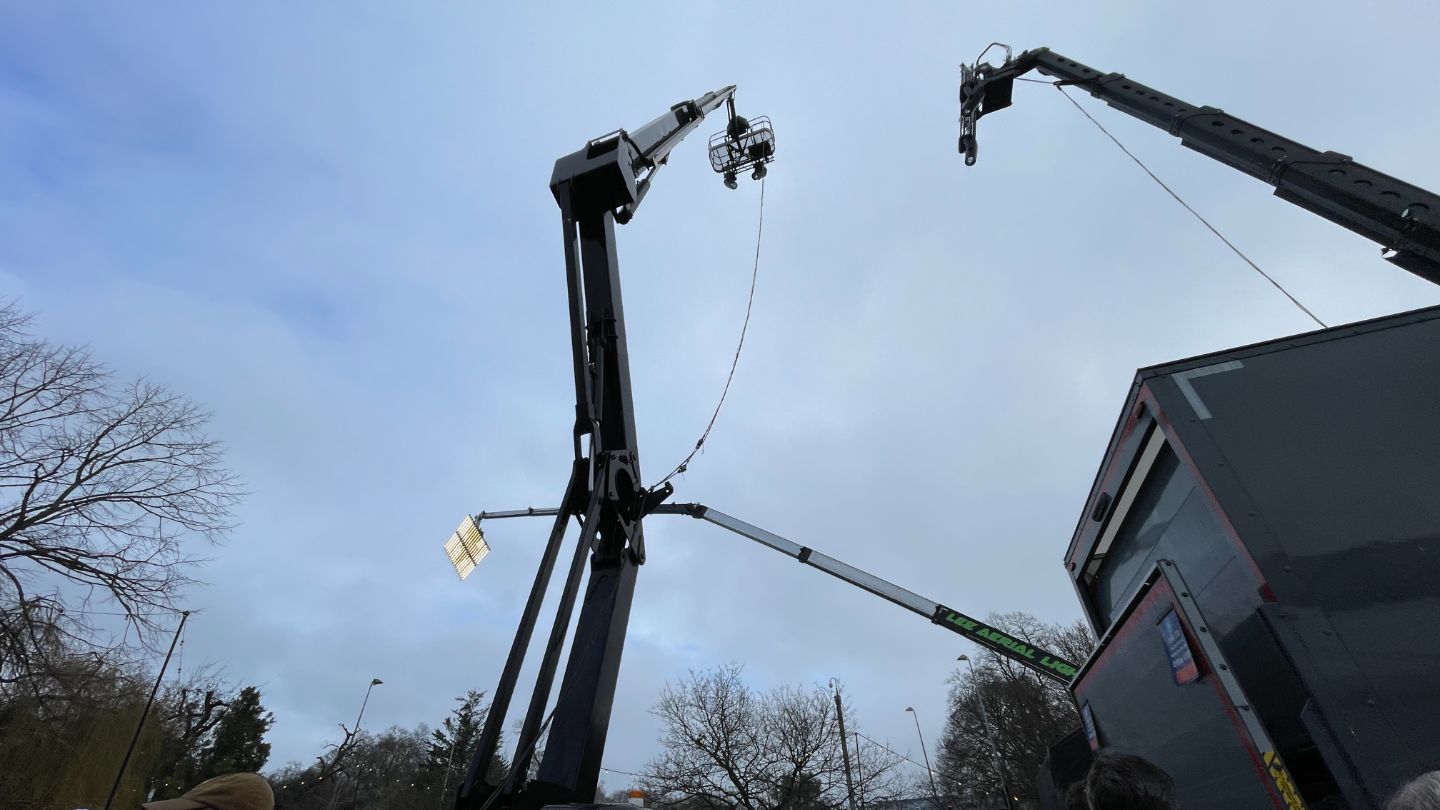
Alongside all of these expert discussions, the show floor at BSC showcased the latest technologies in cinematography, lighting, and grip equipment for film and TV production. This included drones, vehicle-mounted jiggle rigs, LED volumes, and a helicopter array system.
In particular, Sony’s Digital Imaging team hosted a podcast studio showcasing professional audio, video, and workflow solutions for the first time at BSC Expo. In conjunction, GTC Patron Sony unveiled new camera firmware updates that will become available in the first half of 2026 – the Venice2 V4.1 and Burano V3.0 – and previewed the already announced FX6 V6.0 and FR7 V4.0.
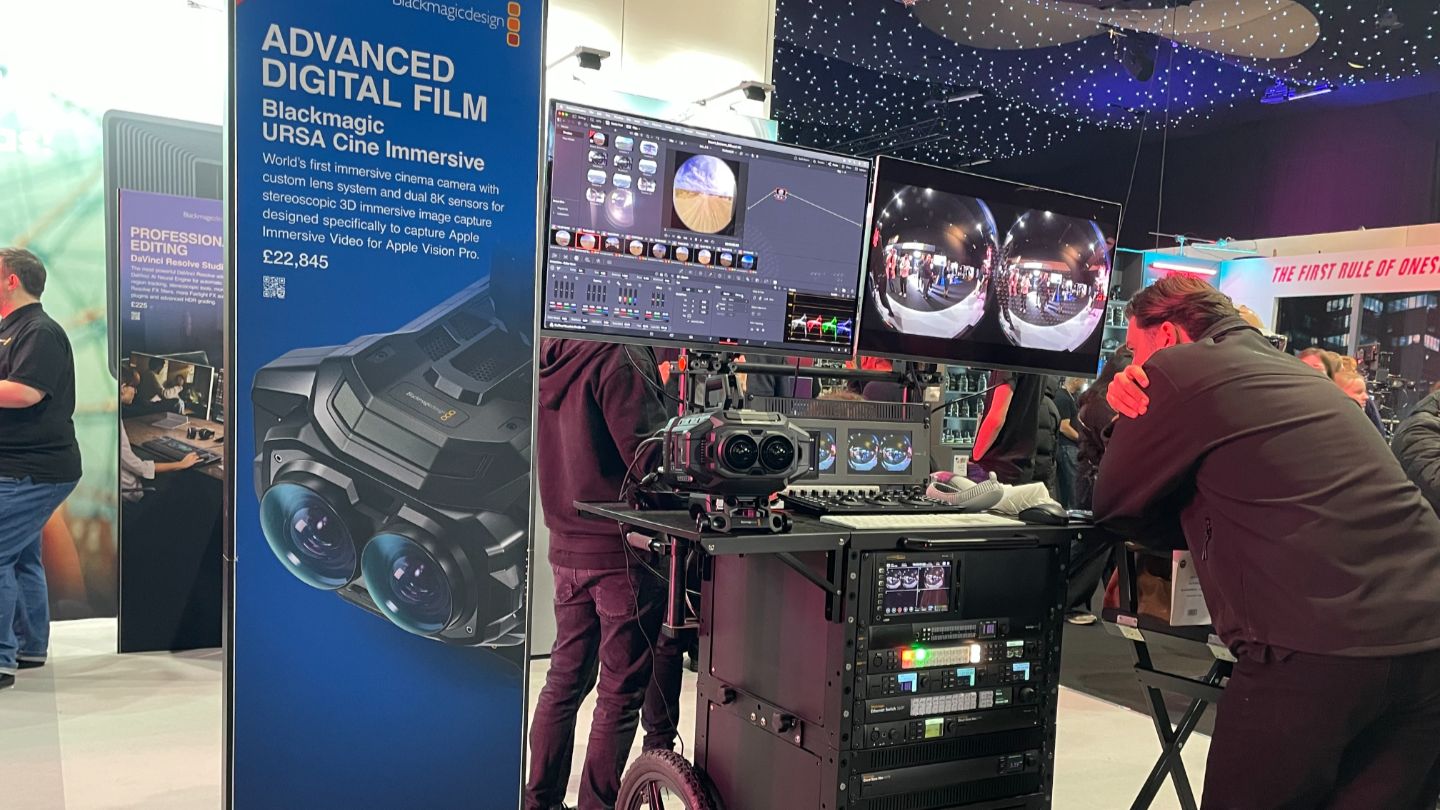
Additionally, the show offered live demonstrations of Apple Vision Pro, alongside the world’s first commercial camera system designed to capture Apple Immersive Video. Designed by Apple and Blackmagic, the URSA Cine Immersive leverages 8K, 3D video with a 180-degree field of view, and Spatial Audio to transport viewers to the centre of the action. It features a fixed, custom lens system pre-installed on the body. Meanwhile, the sensor delivers 8160 x 7200 resolution per eye with pixel-level synchronisation and 16 stops of dynamic range so that cinematographers can shoot 90fps stereoscopic 3D immersive cinema content to a single file.
Likewise, Red Digital Cinema debuted its V‑Raptor XE, the latest addition to the Z Cinema lineup. Built on Red’s proven V‑Raptor [X] architecture, the compact body is just over four pounds and offers frame rates up to 60 frames per second (fps) in 8K VV, 80 fps in 6K S35, 120 fps in 4K, and 240 fps in 2K. It also has 17 stops of dynamic range and low‑light capability. Further, a recent beta firmware update reportedly delivers further gains in boot speed and sensor power performance.

The show even hosted a stand of jewellery that was made entirely of silver harvested from film processing. According to the company, From The Silver Screen, these pieces began life as byproducts of analogue film strips. By reclaiming the microscopic silver halide crystals within these strips, the jewellers were able to create pieces from the latest music videos, commercials, and films, including Bugonia, The Phoenician Scheme, Saltburn, Wuthering Heights, and All of Us Strangers.
Finally, BSC Expo hosted drop-in sessions at its Talent Bar throughout the show, where visitors could get advice from cinematographers and operators.
When asked about the challenges of gaining experience as a young person, Zoe Goodwin, President of the Association of Camera Operators, advised: “Knowledge is power. All you can do is glean as much knowledge as you can from everyone on set – set design, locations, lighting, etc. Grips know everything, especially! Communication is so important. Everyone works better and harder for you when you create a nice environment. I’m always reminding myself that every day we get to play, create art, move people, and laugh with great people. Every day, we’re all learning.”
Adrian Pennington recently spoke with the creative team behind Uncut Gems to discover how they brought their signature brash beauty and adrenaline to 1950’s New York City in a screwball drama. Discover more here.
/2. Channel 4.jpg)
Channel 4 launches instant advertising platform
Channel 4 Sales has launched Instant Re4ch, an advertising proposition intended to offer prioritised planning across Channel 4 Sales' portfolio, guaranteeing peak spots across Channel 4, Paramount, and UKTV channels on the same evening.
 (2).jpg)
Ben Frow, Head, Channel 5, to step down
Ben Frow will step down as Paramount UK’s Chief Content Officer next year, after 14 years of overseeing Channel 5 and its digital brands.
 (2).jpg)
UK “minded to intervene” in Sky-ITV deal
UK Culture Secretary Lisa Nandy has said she is "minded to intervene" in Sky’s £1.6bn deal to buy ITV's media and entertainment division.
.jpg)
BBC News channel launches on YouTube in the UK and USA
The BBC has revealed that its BBC News channel will stream live on YouTube in both the UK and the USA from Thursday 15 October 2026.
 (1).jpg)
Netflix lays off 6% of workforce
In its biggest round of cuts since 2022, Netflix has axed approximately 6% of its employees, including big hitters like Carolina Garcia, Director, Original Series, Netflix, who has been with the streamer for 10 years and oversaw The Duffer Brothers’ Stranger Things.
.jpg)
.png)
.jpg)
.jpg)