
To avoid decline, European media companies must align with global streaming and social platforms.
The entertainment industry is undergoing a global shift towards streaming, social distribution, scale, and AI, creating both growth opportunities and competitive risks for Europe.
New independent research from Ampere Analysis shows that Europe has the opportunity to succeed in a very dynamic and competitive market, but risks losing position and market share if it doesn’t move quick enough to leverage growth opportunities in these growing segments.
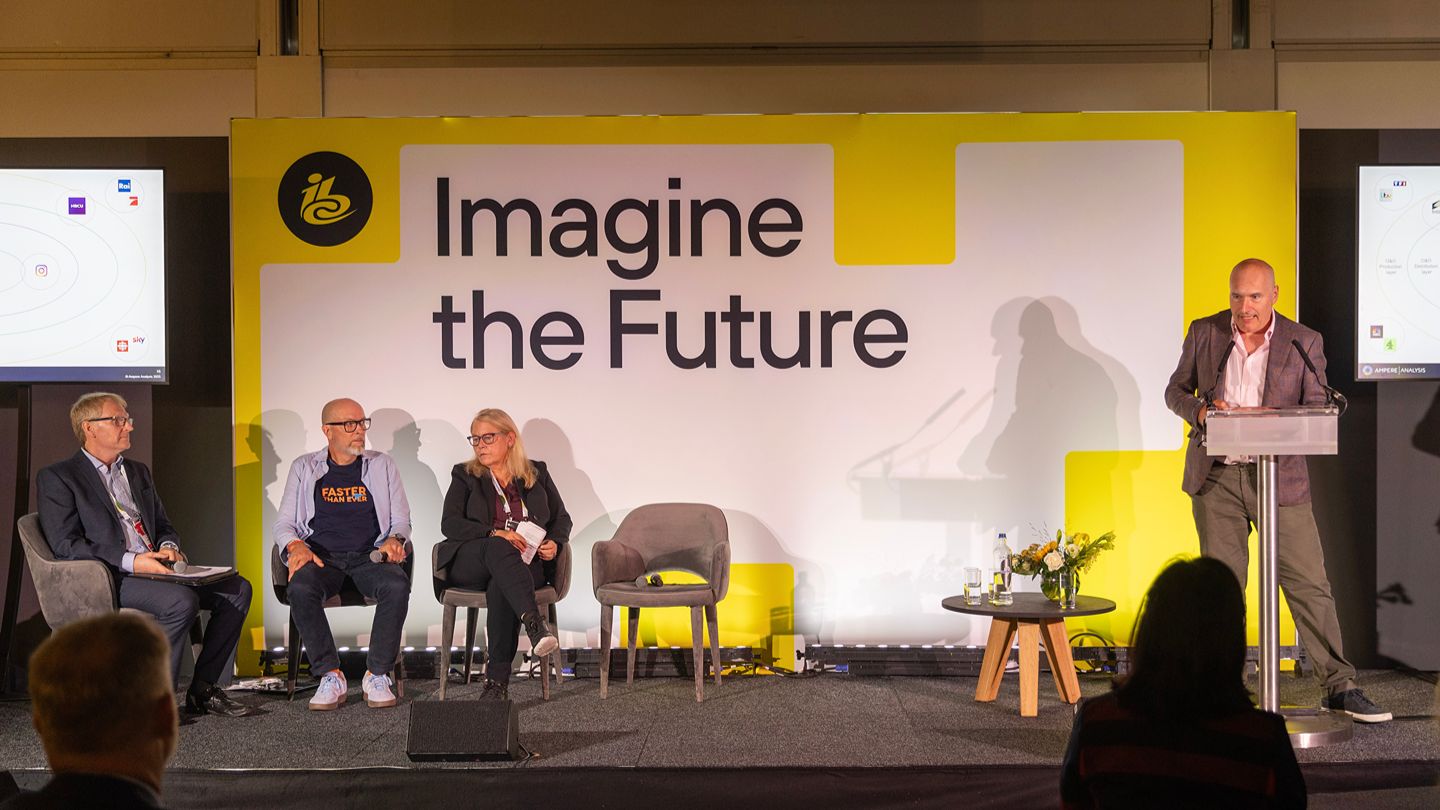
Europe accounts for a quarter of all revenue of all windows of exploitation of the entertainment industry worldwide, but it has now hit an inflection point according to Guy Bisson, Executive Director & Co-Founder, Ampere Analysis.
“The share of legacy media in this revenue pot is shrinking and streaming is growing,” he explained. “At the same time, the audience is shifting rapidly. The entire industry is converging on global streaming technology as the way to reach the end consumer, so these two related concepts are shifting the whole market.”
Anyone outside that vertical structure of controlling the content, controlling the distribution, and reaching the end viewer, is in play for further merger and acquisition activity in the immediate future, according to Bisson. “Single geography or limited geography broadcasters, pay TV platforms, production entities that are not integrated with some form of streaming distribution. Sony, NBCU would be two examples.”
Social players themselves, who want to bring up the value of their advertising, are also increasingly interested in long-form professional content. “Are they going to be the next integrators and start buying back down the chain?”, asked Bisson.
The content market hit the “post peak tv” era in 2022. Western Europe is a major producer of original first-run content, thanks to unscripted TV but has taken a hit in the last 18 months with a swing-back in favour of North America and a big shift to Asia.
Globally, the volume of original production is down 22%, Europe is faring a little better, but this means content spend has stopped growing, according to Bisson. “One segment that is still growing in terms of what it's spending on content is streaming, unsurprisingly. Global streamers are now driving the economics of TV production.”
To survive, legacy broadcasters in the European market whose audience is going elsewhere and whose ad revenue and other income is down and that now have money to make productions “should be seeking deals with the likes of Netflix, Amazon, Disney Plus or YouTube and even Spotify,” said Bisson.
.jpg)
EU Sovereign AI: Collaboration crucial to AI and cloud success
Collaboration and innovation are crucial ingredients for establishing a sovereign cloud and AI ecosystem within Europe to reduce dependency on US hyperscalers, concluded an SMPTE panel at IBC2026.
 (1).jpg)
Authentic future: Trust demands shared responsibility
There’s a shared global responsibility to address piracy, authenticity, and provenance at this critical time, panellists agreed during the recent IBC Conference session, “Security, Authenticity and Provenance: How can we trust the content we have now and in the future?”

Trust is a crucial driver for sovereign AI adoption
The lunchtime session at the Future Tech stage on Saturday titled “From Open Models to Owned Intelligence: Building Sovereign AI for Media” saw representatives from NVIDIA and Dell discuss the merits of localised, open-weight AI models.
.jpg)
AI gender gap exposed: Bias threatens jobs, innovation, and democracy
In an IBC panel, a team of experts from SVG, Women in Virtual Production, and Women in Technology Hollywood asked the searing ethical and feminist questions implicit in the rise of AI.

AI-personalised live sports: Content for the next generation
At IBC2026 conference, Premier League’s Will Brass laid out his vision for the future of live sports, AI, and personalised recommendations.

.jpg)
.jpg)