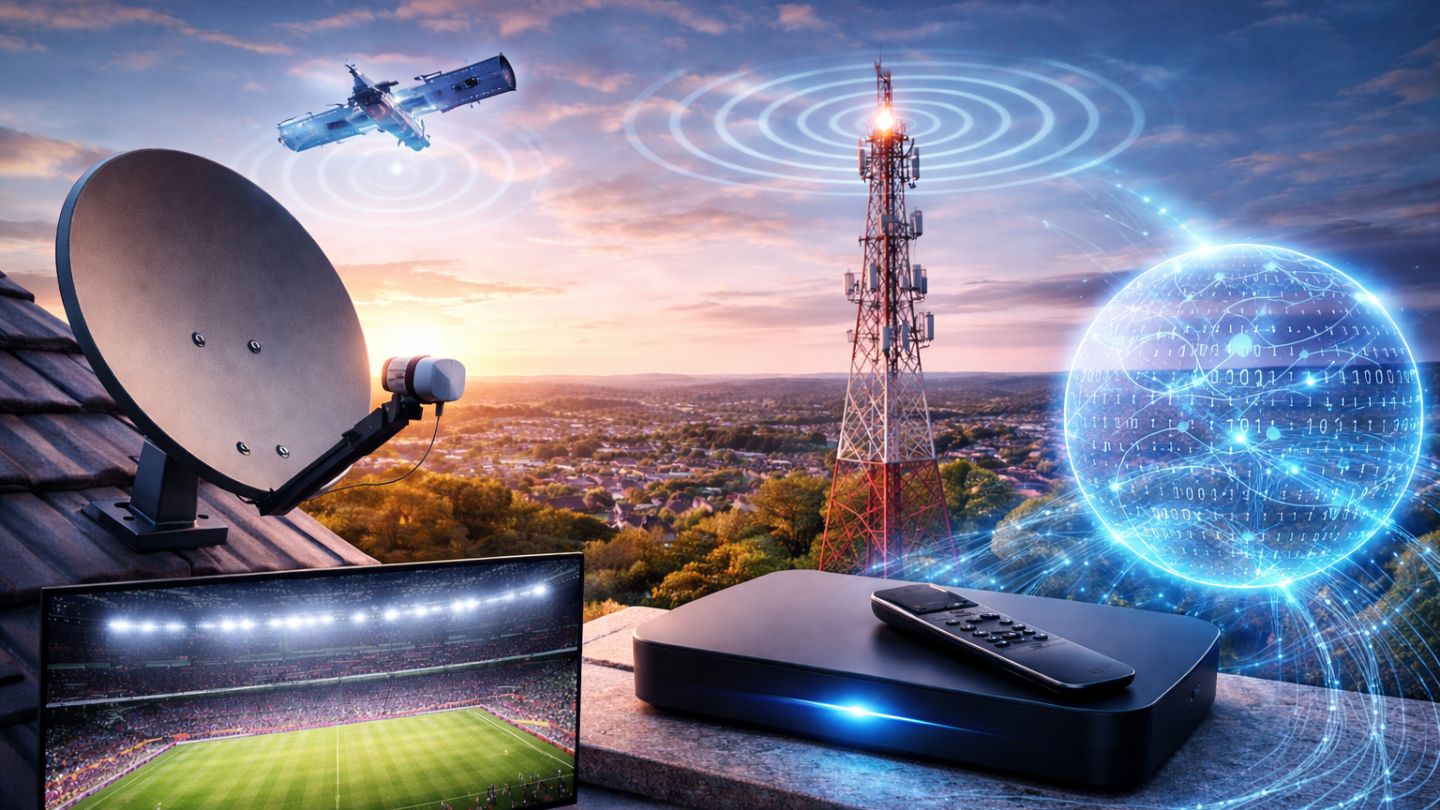
Sky is to cut around 1,000 jobs, about 4% of its workforce in the UK and Ireland, this year. The bulk of the job losses will reportedly come from its engineer teams and consultations have begun.
Sky News reported that a review into Sky’s business structure found less need for satellite specialists as more customers switch to digital-only services. A spokesperson for Sky said: “Increasingly, customers are choosing Sky Glass and Sky Stream which don’t require specialist installation, and that has led us to change the number of roles we need to deliver our services.”

Sky said that it remained committed to its satellite customers and services but signalled that the numbers of engineers needed for specialist servicing and installations had dwindled as customer habits had changed.
The rise in digital products on offer means many customers can now set up new services without any assistance. Sky currently employs about 26,000 people in the UK. Sky was bought by the US media giant Comcast for more than £30bn in 2018.
You are not signed in
Only registered users can comment on this article.
 (1).jpg)
BBC savings could impact tech capabilities, warns NAO
The UK’s public spending watchdog, the National Audit Office (NAO), has warned that the BBC cost-savings programme could impact its digital and technology capabilities.
.jpg)
Andrea Scrosati to leave Fremantle after eight years
Andrea Scrosati, Group COO, CEO, Continental Europe, Fremantle, is to step down from the company after eight years to launch a new entrepreneurial venture.
 (1).jpg)
Prime Video launches AI-powered ball analysis for Champions League
Prime Video is launching an AI-powered feature called Progressive Actions for its UEFA Champions League coverage.
.jpg)
Grand Theft Auto 6 becomes biggest entertainment launch in history
The release of Grand Theft Auto 6 (GTA 6) broke retail sales records on its first full day (November 19) of availability, hitting $3.8bn (£2.9bn).
 (1).jpg)
BBC R&D highlights broadcast TV's 2038 problem
BBC Research and Development has warned that some televisions currently on sale could develop problems in 2028 because of the way they represent dates and times internally, causing the electronic programme guide (EPG) to no longer function.