
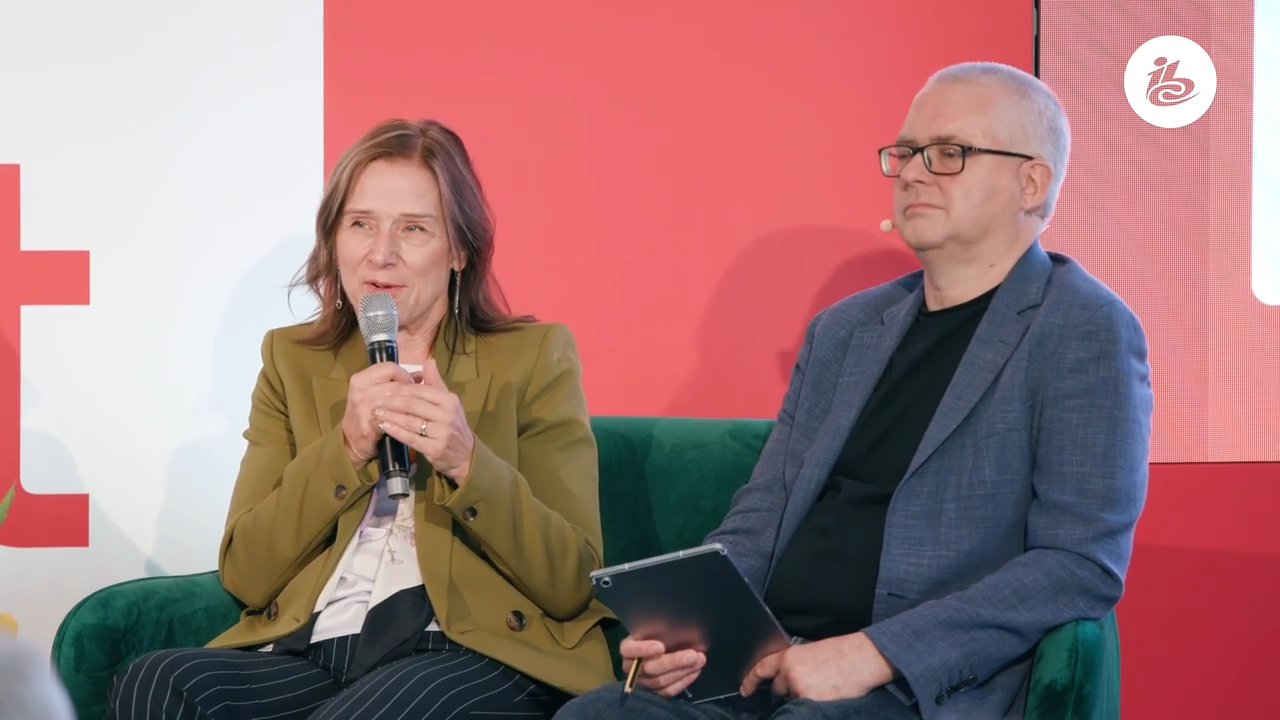
Dominated by consolidation over the last 25 years mostly driven out of the US, the media landscape now in a phase of financial re-engineering further driven by a desperate effort to get more reach and scale, which is affecting all European broadcasters as the forces out of the US are global and heavily armed, said Claire Enders CBE, CEO and Founder, Enders Analysis.
Dominated by consolidation over the last 25 years, mostly driven out of the US, the media landscape is now in a phase of financial re-engineering, further driven by a desperate effort to get more reach and scale, which is affecting all European broadcasters, as the forces from the US are global and heavily armed, said Claire Enders CBE, CEO, Founder, Enders Analysis.
Referencing the three major transactions currently going through regulatory approvals – Paramount and Warner Bros. Discovery, Sky, and ITV, Banijay, and All3Media – Enders noted that these combinations were more about financial efficiency and debt management than other benefits.
“I'm not saying that all broadcasters will go out of business unless they combine with Warner Brothers' Discovery or an American giant,” said Enders. “One of the reasons is that, despite the fact that over a trillion dollars' worth of stuff has been washing over Europe for 13 years, locally made material, franchises, broadcasters are actually holding up relatively well.”
What's driving these mergers today is financial efficiency and scale in ownership of debt, according to Enders. “Getting too big to fail is very important to American companies that are facing many different extraordinary forces, one of the most significant of which is Netflix.”
Netflix is the central force shaping the last decade since its “seismic” launch in 2012. It became the reference model for global streaming, driving others to chase scale through massive content spending. “At the time, people said public service broadcasting would simply disappear; that has not been the case, but there is no question that Netflix has completely levitated above all other forces in a way that is striking.”
.jpg)
From 2020 onwards, the stock market stopped rewarding ever-increasing streaming spends, a large amount of US material was pulled from licensing, and since 2022 there has been a strong decline in the market.
Today, streaming profitability remains elusive for most, according to Enders. “There are some winners and some losers, but I won’t write anybody off because everyone has their place in this universe. You cannot get out of streaming, but you can make it more efficient and less ruinous.”
.jpg)
FAST is the next frontier of creator domination
The creator economy is no longer a sideshow in Free Ad-Supported Streaming TV (FAST) but a core channel segment with platforms actively competing for content.
Global student On Air project is already igniting careers
On Air, the global student‑run broadcast initiative, is scaling up in its second year.
.jpg)
CTO’s lean on AI to reshape business strategy
Senior leaders from Australia’s ABC and Olympic Broadcasting Services (OBS) outlined how AI is reshaping every editorial and operational workflows while insisting that human judgement remains central.
 (1).jpg)
MovieLabs “Roadmap is Becoming The Road”
MovieLabs launched version 3.0 of its Ontology for Media Creation (OMC), developed to provide software applications a common language for describing narrative and production elements and ability for them to interoperate with a common data exchange format.

IBC2026 Live Blog: Day 4 – Everything you need to know
Welcome to the IBC2026 Live Blog, getting under the skin of the global media and entertainment industry's biggest and best trade show.
.jpg)