Live viewing remains a substantial part of watching television, even for younger audiences, according to a new report from UK audience measurement organisation Barb.
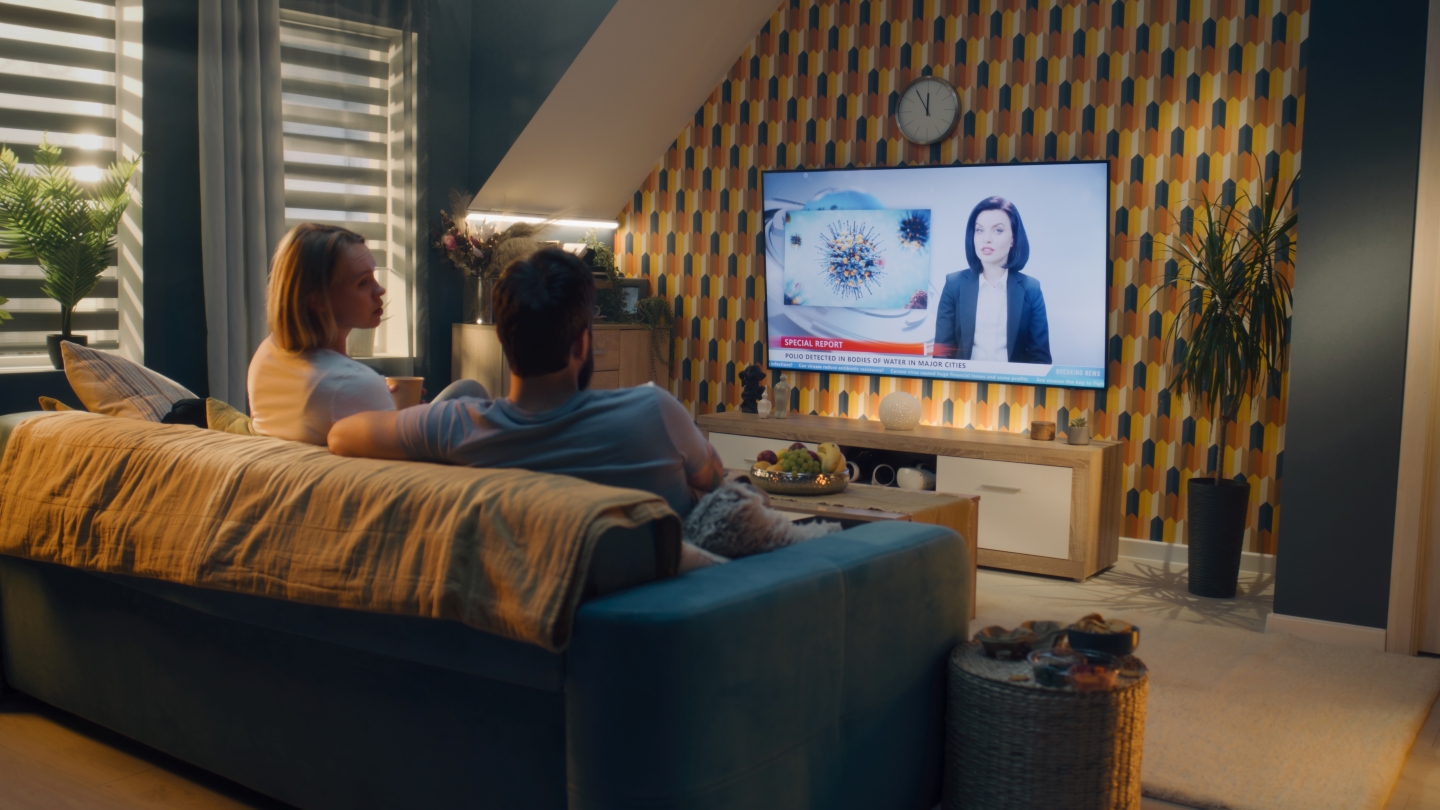
In December 2025, live viewing accounted for 45% of total identified TV set watching, Barb revealed in its annual report on audience habits What People Watched in 2025.

Programmes with large live audiences in 2025 included sporting events like the BBC and ITV’s coverage of the Women’s Euros final, entertainment shows such as BBC One’s Celebrity Traitors, and comfort TV like Channel 4’s Gogglebox.
On-demand streaming – via broadcasters’ VOD services, streamers, or video-sharing platforms – accounted for 38% of viewing in 2025.
Barb found that a large proportion of 2025 viewing on the UK’s three biggest streamers – Amazon Prime Video, Disney+ and Netflix – was to content available for more than 12 months, reflecting the importance of large library catalogues.
The most-used TV navigation platforms in 2025 were Freeview, Sky, and smart TV electronic programme guides (EPGs), with YouTube coming in fourth.
Viewers were most likely to turn to the top 10 TV channels first after switching the TV set on, with 37% of viewing sessions starting with one of them. Netflix was the most popular first port of call for young adults, accounting for 26% of TV set switch-ons among 16–34-year-olds, while the same proportion of 4–15-year-old children‘s viewing sessions started with YouTube.
Furthermore, Barb’s data also showed that the TV set has become the most-used device for people to watch YouTube through their domestic WiFi networks. The use of the TV set to watch YouTube is growing among all age groups, but viewing is skewed towards children aged 4–15, who accounted for a quarter of YouTube TV-set viewing in 2025 but only one-seventh of the UK population.
Justin Sampson, Chief Executive at Barb, said: “Commentary about television is too often based on a binary premise that ignores a more complex reality. Barb’s independent evidence points to a world in which viewing is defined more by adaptation than disruption.
“The prognosis is more connected, nuanced, and resilient than the clichés and partial viewpoints suggest. Live audiences are healthy, children and young people haven’t deserted linear services, and there’s an increasingly symbiotic relationship between all services and platforms in the TV ecosystem.”
The BBC Group recently struck a deal to produce new programming for YouTube, in an effort to capture younger viewers. Discover more here.
.jpg)
Sky Sports launches live subtitles for Premier League games
Sky Sports launches Sky Sports has launched a major accessibility initiative across its Premier League coverage, introducing live subtitles and live descriptive audio commentary for matches.
.jpg)
Xbox launches unit focused on film and TV
Microsoft’s Xbox has launched a division to extend its video games into film and television.
 (1).jpg)
Channel 4 names David Brindley as Director of Programmes
UK broadcaster Channel 4 has named David Brindley as its Director of Programmes, responsible for all programming across scripted and unscripted genres.
Disney+ to stream Super Bowl LXI
In collaboration with the NFL, Disney+ will livestream Super Bowl LXI, ESPN’s first-ever Super Bowl production.
.jpg)
Prime Video to exclusively stream the Emmy Awards
As part of a six-year agreement, the Television Academy has established Prime Video as the exclusive global home of the Emmy Awards.
.jpg)