
As the UK government begins its BBC Charter Review consultation, the broadcaster has published a 100-page response, urging radical reforms to its independence and funding model.
According to the organisation, a Charter Review that simply preserves the status quo will not be enough to deliver a BBC that remains recognisable to audiences. The organisation warned: “Make the wrong choices now, and there is a real risk that UK creativity and storytelling will be squeezed out, and our creative sector will fall into decline.”
The report reasoned that the “permanent and irreversible” disruption caused by “global tech giants has transformed the way content is viewed and eroded the traditional economics of television”. Namely, the BBC underlined “the growing popularity of on-demand consumption and video sharing platforms” over the live viewing habits that its TV licence rules are based upon.
To face these headwinds, the BBC highlighted its need for a “more sustainable” funding model and “increased regulatory flexibility”.
Source: Shutterstock.com
Updated funding
To argue the former, the BBC revealed that last year’s licence fee income was “around a quarter less, or £1.2bn lower in real terms, than it was at the start of this Charter period”. While emphasising that it was already taking proactive measures to combat this, with “£1.5bn of savings [made] during this Charter, and has around half a billion more to deliver”, the broadcaster pointed out that a key factor of this difficult funding situation was that “94% of people use the BBC each month, yet fewer than 80% of households contribute”.
As a result, the organisation made the unexpected proposal “that iPlayer could be opened to other PSBs (and their commercial services), with support for their business models (i.e. advertising or subscription), whilst keeping BBC public service content advertising-free.” This move is intended to ensure the UK retains a streaming platform that competes with global services. “We will also explore opening up BBC Sounds to UK third parties and creators… while making sure it is clear what content audiences get from the BBC and from elsewhere.”
This proposal seemed to counter the Charter’s original suggestions for paywalls, or the BBC to publish and monetise licence-fee-funded content on third-party platforms, like YouTube, through adverts. To the paywall point, the BBC plainly retained that “putting public service content behind a paywall is inconsistent with our public mission of a universal BBC providing value for all”.
Explaining the more nuanced thought process behind rejecting the third-party monetisation model, the BBC wrote: “While we see [the BBC’s recent partnership with YouTube] as a significant opportunity to serve audiences and deliver public value, we do not envisage a major commercial upside due to the limited revenues on offer from video sharing platforms… YouTube economics are challenging for broadcasters to make a positive return on premium content – advertising pricing is significantly lower than linear and broadcaster-video-on-demand (BVOD), fewer adverts are served, and the platform takes a large share of the revenue.”
Moreover, the BBC moved for the return of the World Service funding to the UK government, and UK government funding to revert to paying directly for the open-source intelligence services it receives from BBC Monitoring “to stay ahead of fast-moving information threats.”
The BBC’s proposals also included further actions to tackle disinformation and misinformation through trusted news and information, and the deployment of new technology. Alongside this, it stressed plans to strengthen partnerships with local news providers and expand Local Democracy Reporting Service reporters and coverage to support grassroots democracy. Additionally, it proposed evolving Bitesize to reach and support more children – boosting media literacy, knowledge, confidence, and critical skills to help them navigate today’s world.
However, none of it will reportedly be possible without reform of the BBC’s funding.
Relaxing regulation
Another key area put forward for reform was the Charter’s expiry date, which other Charters, like the Bank of England, the British Film Institute, and the British Council, reportedly do not include.
The organisation asserted: “This creates an existential threat – the public could lose its national broadcaster due to inaction or apathy rather than an active choice supported by a public mandate… As the Green Paper acknowledges, a Charter with an explicit end date creates uncertainty for the BBC and an opportunity for political interference.”
The BBC also highlighted the operational and commercial complications this end-date entails in its day-to-day operations, as the third parties it relies upon to maintain its infrastructure require multi-year contracts. It stated: “When the negotiations are near a funding settlement or end of Charter period, the supplier market often reacts by pricing in explicit additional risks, or the BBC’s ability to secure discounts for longer term contracts is lost.”
Therefore, the broadcaster called upon the next Charter to “remove a fixed expiry date but also recognise the fact that the BBC has no innate right to exist. Any decision on the future existence of the BBC should be supported by a public mandate and be subject to appropriate parliamentary scrutiny.”
Beyond this, the BBC called for changes to the board appointment process and how to strengthen feedback from and accountability to the public. Clarifying this priority, the report highlighted that of the 872,000 responses to the BBC’s recent Our BBC, Our Future questionnaire, 91% said that it is important for the BBC to be independent from the government of the day, but only 43% believe it is effective in this area now.
To tackle this, the BBC suggested that “all future Non-Executive Director (NED) appointments to the Board, including the Chair, should follow a clearly defined, transparent and broadly consistent process. This could be led by the Senior Independent Director, as a member of the BBC Board’s Nominations Committee. As a publicly funded institution, any process should also be subject to appropriate public scrutiny – more so than the process is today.”
“We suggest that it is run in line with appropriate Public Appointment principles, and that senior officials from the UK and Nations’ devolved administrations have a role on the appointment panels for the Chair and Nations’ NED appointments. Preferred candidates for the relevant appointments might also be subject to scrutiny by the relevant legislature, similarly to the current process for a Chair appointment.”
Executive comment
When announcing the 100-page response to the Government’s consultation, which closes on Tuesday, 10 March, Samir Shah, Chair of the BBC, said: “The BBC is a vital national asset. A shared investment in the UK’s culture, communities, and democracy. It supports world-leading creative industries and drives economic growth, as well as promoting the UK’s interests and influence abroad. But it is also at risk like never before and this Charter must deliver reform. In a fast-changing and challenging world, the BBC is needed more than ever.”
Tim Davie, Director-General of the BBC, added: “The BBC stands ready to continue to innovate, to do more for audiences and to support our partners across the UK. But the choice here is clear: back the BBC or watch it decline; the status quo is not an option. Clear decisions are needed to ensure the BBC is funded sustainably and fairly so it can continue to deliver, both for audiences and for the country. Our response to the Government consultation sets out our vision for what we think can be achieved in the future, with reform, bold choices and investment – a BBC for all.”
Ian Murray, the UK’s Minister for the Creative Industries, recently said that the UK’s BBC and Channel 4 should forge closer ties in an effort to compete with global streaming services such as YouTube and Netflix. Discover more here.
.jpg)
EU Sovereign AI: Collaboration crucial to AI and cloud success
Collaboration and innovation are crucial ingredients for establishing a sovereign cloud and AI ecosystem within Europe to reduce dependency on US hyperscalers, concluded an SMPTE panel at IBC2026.

Comcast and Paramount Skydance weigh future of SkyShowtime platform
Comcast and Paramount Skydance are reportedly considering winding down their SkyShowtime joint venture.
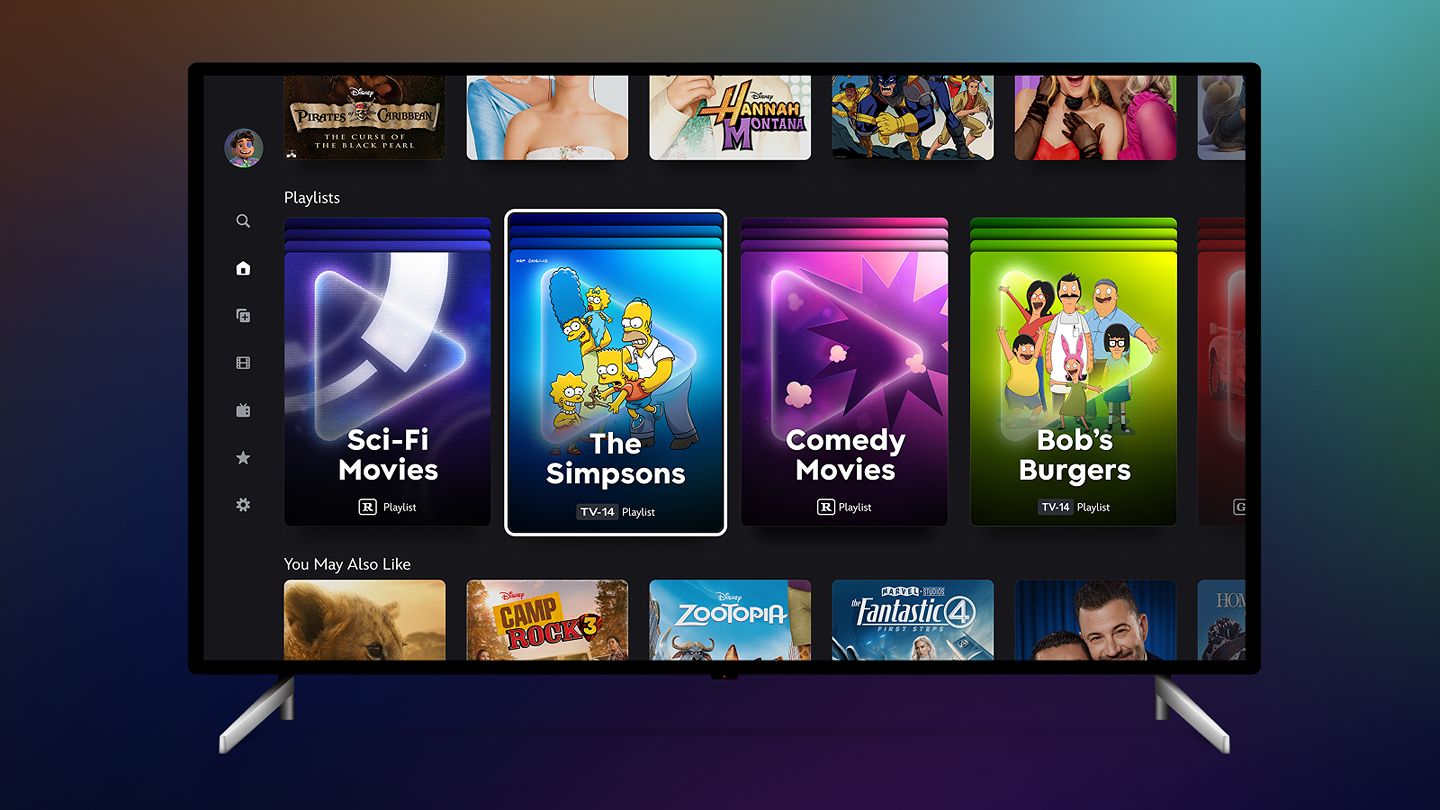
Disney+ launches curated Playlists feature
Disney+ is introducing Playlists, a feature that brings together themed collections of episodes and movies that play continuously.
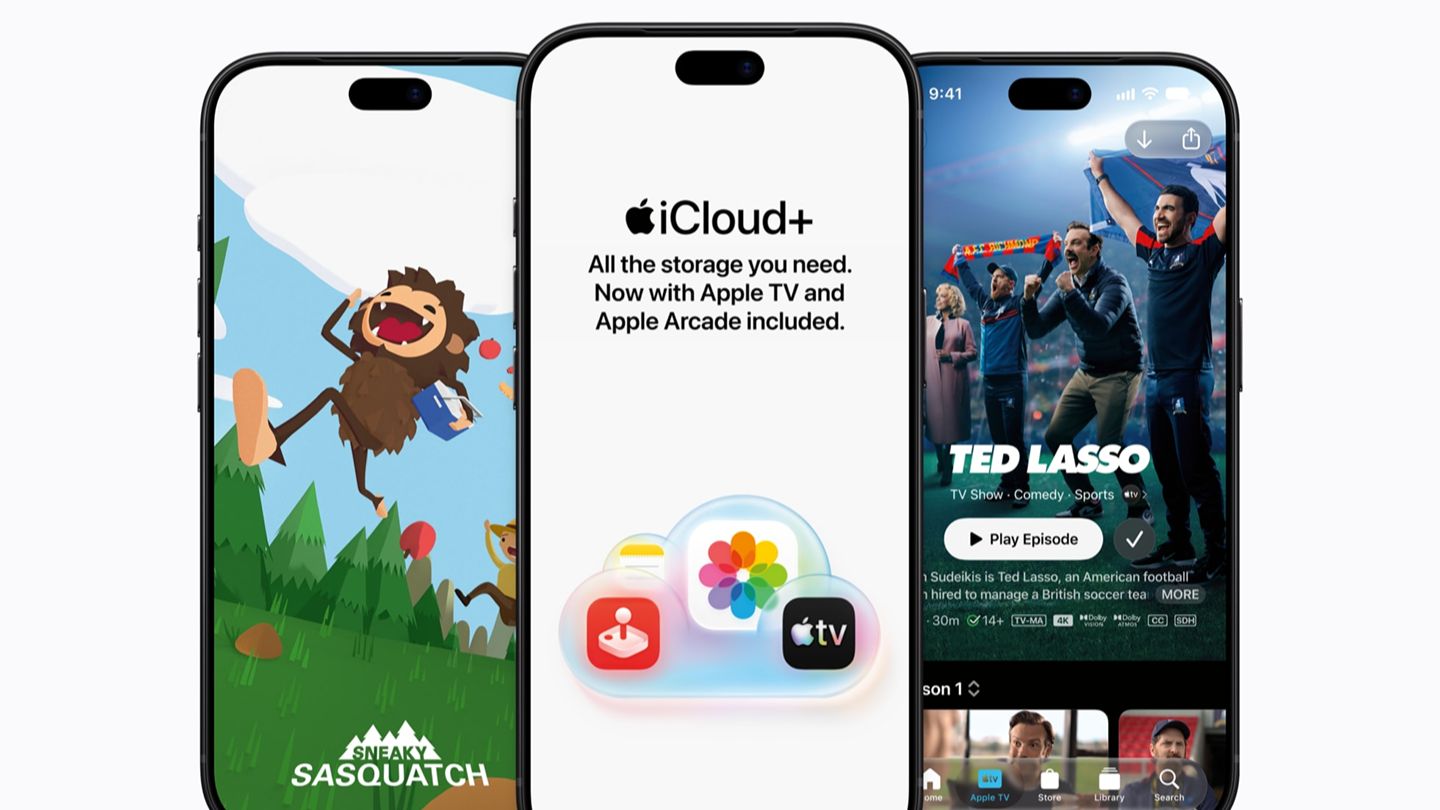
Apple expands Apple TV to 170 markets
Apple is rolling out is Apple TV streaming platform into 59 additional countries, taking the service’s global footprint to 170 markets.

Canal+ and LaLiga strike anti-piracy agreement
France’s pay-TV group Canal+ and Spanish football league LaLiga have signed a strategic anti-piracy agreement covering nearly 50 countries across Europe, Sub-Saharan Africa, and Haiti.
.jpg)