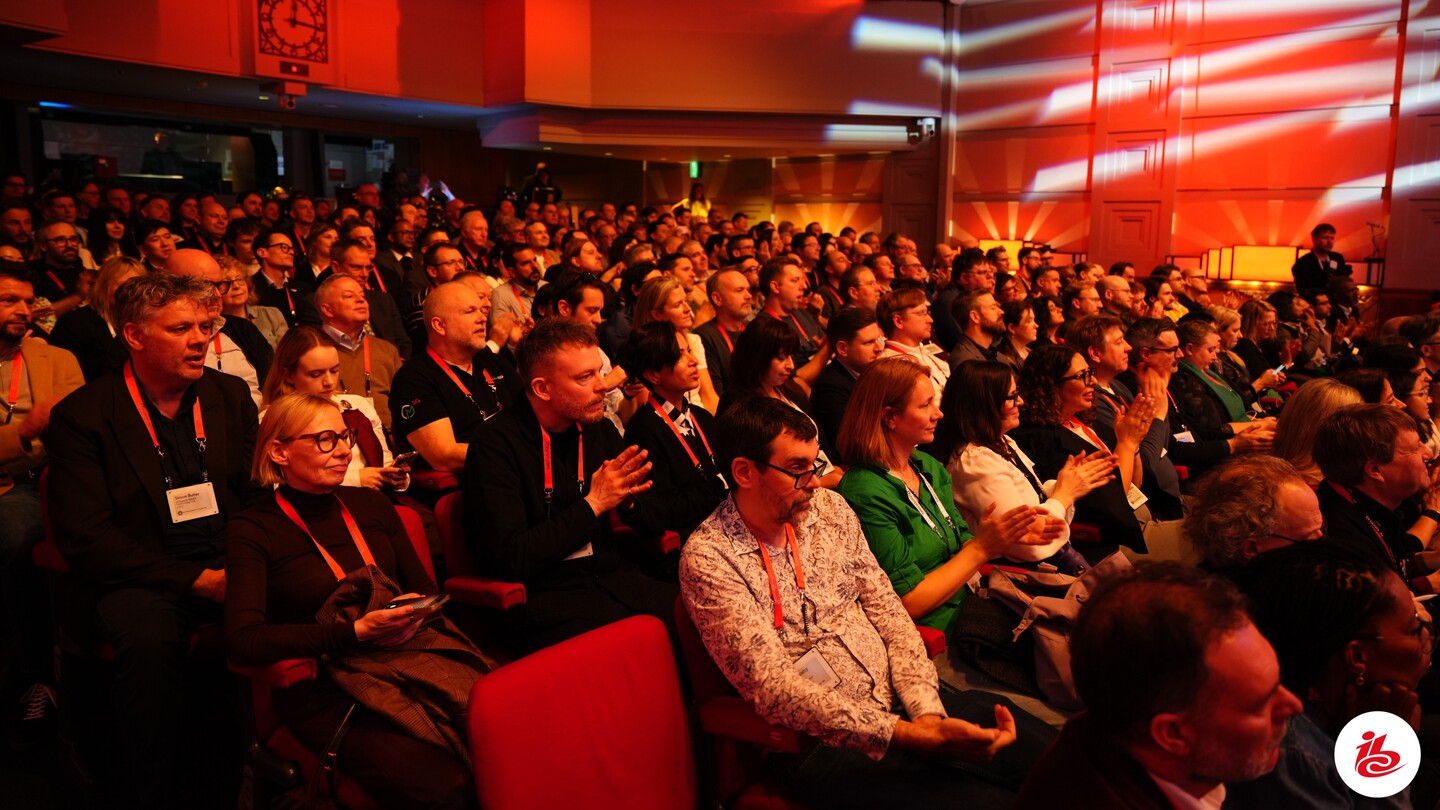
Europe is good at inventing and scaling to a certain extent, but is lacking Series A and Series B (rounds of funding), which is where the North American market has an advantage, according to Anette Schaefer, CEO, EIT Culture & Creativity. “We need to build an environment to allow companies to truly scale in Europe and from there globally,” she said. “We have the ideas and great research from our university partners, but the monetisation is often lacking.”
The European investment ecosystem is quite fragmented, with Nordic expertise for gaming, France and Italy for fashion, and France for audiovisual. “We must connect the investment communities, start ups and scale ups, this will enable the creation of more sustainable businesses in Europe,” said Schaefer.
This session marks EIT Culture & Creativity's introduction to IBC as European Innovation Partner, and it brought its ecosystem of start-ups to the show. “The IBC Accelerator programme is a perfect example of how you can scale and accelerate start-ups, making the industry more aware of existing programmes and allowing them to connect to potential future partners,” added Schaefer.
As the venture arm of the European Union, the European Innovation Council carries an 11bn euro fund to fund grants and equity, is supporting 1400 projects and as yet 400 companies in an equity stage across the whole spectrum from quantum to biotech for health, according to Michiel Scheffer, President of the Board, European Innovation Council.
.jpg)
“Our media portfolio is quite small, but our AI portfolio is substantial,” said Scheffer, who noted that there might be spin offs offering techniques from other industries that could be used in media. “We try to organise connections to see where unforseen parallels are possible. Right now, Europe is conscious of its vulnerability and of the need to strengthen our strategic autonomy if we are to control our space and our media, and there are technologies enabling that.”
The regulatory landscape is one of the things holding Europe back when it comes to great collaborative technology. “If you want to grow, you may have an issue setting up a new company in a new market,” explained Schaefer. “We need to lower these entrance barriers, as well as access to capital.”
The age of AI is not just the provision of the young, said Stefan Kollinger, Chief Innovation Officer, ORF & Chair, EBU AI Accelerator, ORF. “The last two decades in the media industry have been very vendor-driven, and we may be at the start of a new era of building things. This industry needs real expertise in various domains who can use technology to upskill and to create new things.”
The speed of innovation is accelerating every month, he added. “The question is, will the organisations, in terms of governance, anticipating, processes, be able to extract the value that is created by theirown people?”
.jpg)
Delta Protocol sets sights on becoming new streaming industry standard
The Saturday pre-lunch slot on Hall 14’s Future Tech stage was ably filled by the presentation of the IBCAccelerator project, ‘Delta Protocol: The Future of Live Streaming’.
.jpg)
Virtual production: Patient GenAI educators needed
Kicking off Saturday morning on the Future Tech Stage, a fireside chat titled ‘Hybrid Filmmaking: How Innovative Dreams Is Rewriting the Rules of Production’ saw Adam Jones, Director of Production Technology and Innovation, Innovative Dreams, dig into the details of integrating generative AI and virtual production into his filmmaking pipeline with Sean Wallitsch, Senior Visual Compute Solutions Architect, Amazon Web Services.
.jpg)
EBU confident of shared cloud future
European public service media have taken a significant step toward a shared cloud future. A new feasibility study revealed for the first time at IBC, confirmed that a pan‑European cloud ecosystem is achievable — provided broadcasters can overcome several organisational, financial and regulatory hurdles.
.jpg)
AI transformation reshapes CNN’s future
CNN is fusing AI into the backbone of its operations to give the 46‑year‑old cable network the legs to thrive for another five decades.
.jpg)
Advertising shifts to storytelling
With the spend on advertising dollars reaching fewer people brands are turning to branded entertainment and other content creation channels.

.jpg)