
IBC has launched How Did You Get Here?, a study designed to better understand how people enter and build careers in media technology.
The study has been launched in collaboration with Women in Streaming Media and industry partners, including IAMT, SMPTE, RISE Academy, and the Media Talent Manifesto.
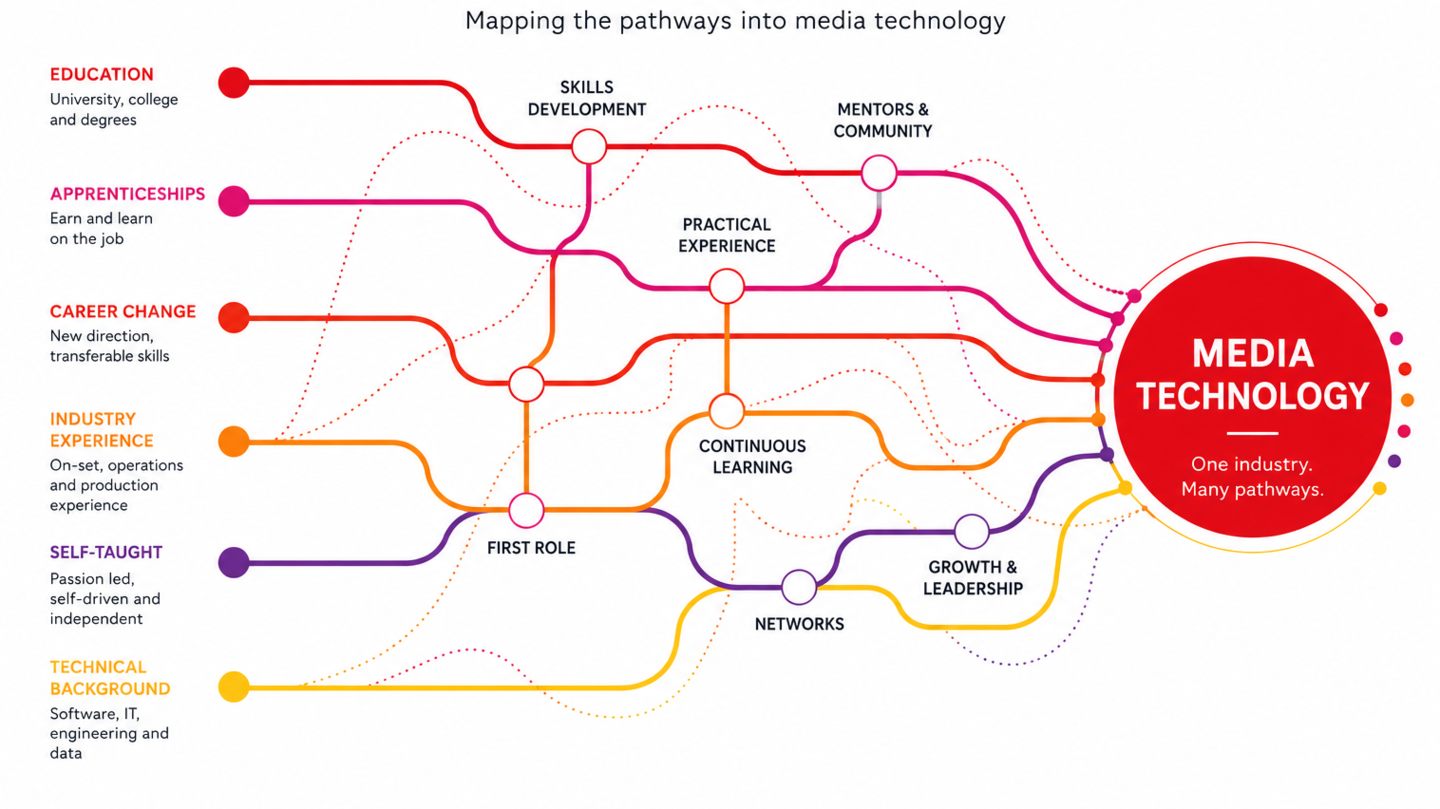
Media technology professionals follow a wide range of routes into the industry, from university and apprenticeships to career changes, military service, and adjacent sectors. As these pathways evolve, the study seeks to understand how today’s workforce entered the field and what that means for the future.
Drawing on the experiences of engineers, technologists, and technical specialists across broadcast and media, the research aims to build a clearer picture of the industry’s talent pipeline and support informed discussions around skills, education, and workforce development.
The study will explore: how professionals first entered the industry; the skills and capabilities required in current roles; how those skills were developed through education, training, and workplace experience; whether existing pathways remain accessible and viable today; and what opportunities and barriers are shaping the future workforce.
Polly Hickling, who is leading the initiative through Women in Streaming Media, said: “Behind every innovation, every platform, and every broadcast are people. Yet we know surprisingly little about how those people found their way into our industry and whether those same opportunities still exist for those coming next.
“‘How Did You Get Here?’ is an opportunity for the global media technology community to tell its story. By bringing those experiences together, we hope to create a valuable evidence base that can help shape future thinking around skills, education, and talent development. The more voices we hear, the more powerful that picture becomes.”
Initial findings will be shared at IBC2026 as part of the conference’s Talent Programme.
The study forms part of a broader research initiative. A complementary survey, undertaken in partnership with SMPTE and (initially UK) academic institutions, will examine how current educational provision aligns with the capabilities and pathways identified by industry respondents.
Together, these insights will provide a view of both sides of the talent pipeline: the skills required by industry and the pathways available to develop them.
Professionals across the media technology ecosystem are encouraged to participate and help create a valuable benchmark for the industry and a resource for future generations.
For more information and to take part, visit: Media & Broadcast Technology Industry Pathways.

UK MPs set out BBC funding plan, warning of ‘fork in the road’ moment
The BBC should explore new ways to raise revenue, make better use of its buildings to support the creator economy, and spend more wisely when competing for programming, according to a group of UK MPs.

Ynon Kreiz named as co-CEO of combined Paramount-WBD as judge approves deal
A California judge has formally approved Paramount Skydance’s settlement with California and other states, clearing the final hurdle required for it to close its $110bn acquisition of Warner Bros. Discovery (WBD).

Netflix to expand ad supported plan in Europe
Netflix’s ad supported plan is to expand to nine new European countries next year.

BBC Studios hires Sally Habbershaw as President of Global Distribution
BBC Studios has appointed Sally Habbershaw as President of Global Distribution, responsible for leading the company’s worldwide content sales business.

Arqiva calls for ‘managed’ 2044 digital terrestrial TV switch off
Broadcast infrastructure firm Arqiva has called for the government to switch off digital terrestrial television (DTT) in 2044.
.jpg)

.jpg)